
Keratopigmentation: A Major Advance in Aesthetic and Reconstructive Ophthalmology
Keratopigmentation represents a major breakthrough in the field of aesthetic and reconstructive ophthalmology. This corneal pigmentation technique, still relatively unknown to the general public, offers innovative solutions for many ocular issues, whether medical or aesthetic in nature.
What is Keratopigmentation?
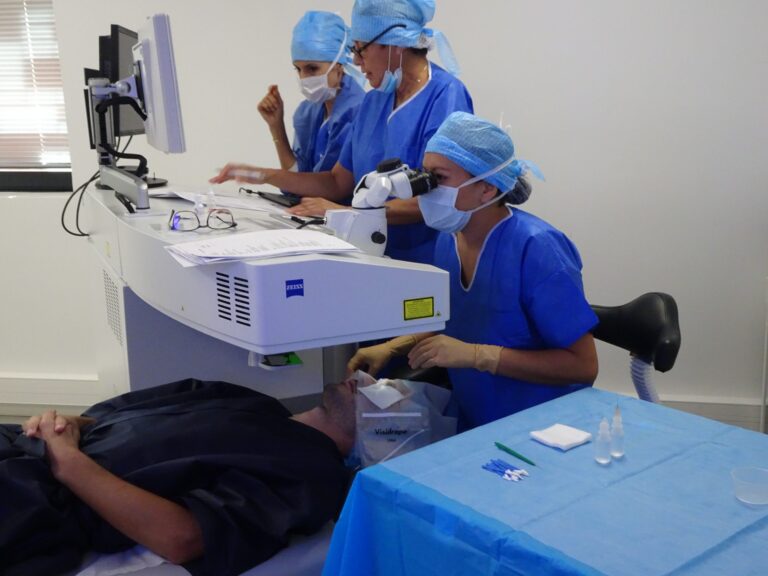
Keratopigmentation is an ophthalmological procedure that involves introducing biocompatible pigments into the cornea, the transparent surface of the eye. Unlike traditional corneal tattooing, this technique uses high-precision instruments, typically assisted by a femtosecond laser, to create an intracorneal tunnel where the pigments are deposited.
Fundamental Principles of the Technique
The principle is based on inserting medical pigments into the thickness of the cornea, specifically into the corneal stroma. This intermediate layer of the cornea allows for durable and stable pigmentation. The insertion depth is calculated precisely to ensure both the desired aesthetic result and the safety of the ocular structure.
The pigments used are specially designed for ophthalmological use. They are inert, biocompatible, and tested to ensure they do not trigger inflammatory reactions or rejection. Their composition allows for long-term stability of the chosen color.
Who is Keratopigmentation For?
Keratopigmentation meets varied needs, grouped into two main categories: medical indications and aesthetic requests.
Medical Indications
This technique finds its main application in treating ocular pathologies or traumas that affect the appearance of the eye:
- Corneal leukomas constitute the most frequent medical indication. These white opacities of the cornea, resulting from infections, trauma, or previous surgeries, create a visible difference between the two eyes. Keratopigmentation allows masking these whitish areas by restoring a natural appearance.
- Aniridia, the total or partial absence of the iris, whether congenital or acquired following trauma or surgery, can be corrected aesthetically. Keratopigmentation allows recreating the appearance of a normal iris, significantly improving the cosmetic aspect of the eye.
- Corneal dystrophies and certain visible corneal scars also benefit from this technique to harmonize the appearance of the eyes.
- Severe photophobia, characterized by excessive sensitivity to light in certain patients with albinism or other conditions, can be alleviated by creating a pigmented artificial iris that better regulates light entry.
Aesthetic Indications
Beyond therapeutic applications, keratopigmentation responds to purely aesthetic requests:
- Changing eye color represents the main aesthetic demand. Unlike colored contact lenses, keratopigmentation offers a permanent and natural result. Patients generally wish to go from a dark color to a lighter shade, although all nuances are technically achievable.
- Intensifying the natural color allows for obtaining a deeper and more expressive gaze without radically changing the appearance.
- Voluntary heterochromia, or the creation of a color difference between the two eyes, attracts some people looking for a unique and distinctive appearance.
The Keratopigmentation Procedure
Understanding the complete process, from the initial consultation to post-operative follow-up, allows approaching this intervention with serenity.
Preoperative Consultation
The first step consists of a complete ophthalmological examination. The practitioner evaluates overall eye health, measures corneal thickness, analyzes the eye structure, and checks for the absence of contraindications. This consultation also allows discussing the patient’s expectations and determining the project’s feasibility.
Choosing the color represents a crucial moment. The practitioner proposes different shades taking into account skin tone, hair color, and personal preferences. Digital simulations can be performed to visualize the potential result.
Operative Technique
The intervention takes place under local anesthesia by instillation of numbing drops. It is generally performed on an outpatient basis and lasts between 30 minutes and one hour per eye.
- Creation of the corneal tunnel: Using a femtosecond laser or a microkeratome, the surgeon creates a circular tunnel within the thickness of the cornea, at a predetermined depth. This step is painless and extremely precise.
- Injection of pigments: The pigments are then delicately introduced into the created tunnel using specialized micro-instruments. The practitioner controls the homogeneous distribution of the pigment in real-time to obtain a natural rendering.
- Closing and verification: Once pigmentation is complete, the tunnel closes naturally. The surgeon proceeds with a meticulous verification of the result and corneal integrity.
Post-Operative Follow-Up
The days following the intervention require relative rest and strict adherence to medical recommendations. Antibiotic and anti-inflammatory drop treatment is systematically prescribed to prevent any infection and reduce inflammation.
The first 48 hours may be accompanied by a foreign body sensation, slight tearing, and temporary photosensitivity. These inconveniences generally disappear quickly.
Check-up consultations are scheduled at 24 hours, one week, one month, and three months after the intervention to monitor healing and result stability.
Expected Results and Longevity
The results of keratopigmentation are visible immediately after the intervention, although the final color stabilizes in the following weeks.
Visual Aspect Obtained
When the technique is mastered and performed by an experienced practitioner, the result appears natural and harmonious. Pigmentation allows reproducing the subtle variations and nuances observed in a natural iris. The effect of depth and texture can be recreated by a graduated application of pigments.
For medical indications, the main objective is harmonization between the two eyes. The result often allows patients to regain self-confidence and significantly improve their quality of life.
Durability and Stability
The pigments used in keratopigmentation are designed to be permanent. Medium-term follow-up studies show excellent color stability over several years. Contrary to some fears, pigments generally do not migrate or change shade over time when correctly positioned.
However, a slight fading of color intensity may occur in some patients, sometimes requiring a minor touch-up after a few years.
Impact on Vision
One of the major advantages of keratopigmentation lies in its non-invasive nature regarding visual function. The intervention does not modify visual acuity when performed according to standards. The pigmented zone corresponds to the peripheral part of the cornea, equivalent to the natural iris, and therefore does not disturb the path of light towards the retina.
Risks, Side Effects, and Contraindications
Like any medical procedure, keratopigmentation carries risks that should be known before committing.
Risks and Potential Complications
- Infection represents the most feared risk, although rare thanks to strict asepsis protocols and preventive antibiotic treatment. A corneal infection requires immediate management to avoid visual sequelae.
- Post-operative inflammation is frequent but generally well-controlled by anti-inflammatory treatment. In rare cases, it can persist and require prolonged treatment.
- Healing disorders can lead to delayed closure of the corneal tunnel or the formation of visible scars.
- Pigment migration, although exceptional with modern techniques, can create an irregular appearance or unsightly discoloration.
- Allergic reactions to pigments remain possible, although the products used are rigorously tested.
- Aesthetic dissatisfaction constitutes a non-negligible risk, particularly in the context of purely aesthetic requests. The result may not correspond exactly to expectations, hence the importance of clear communication during consultation.
Temporary Side Effects
Beyond complications, some benign and transient side effects are frequent: gritty sensation in the eye, ocular redness, tearing, sensitivity to light, slightly blurred vision for a few days.
Contraindications
Certain situations formally prohibit performing a keratopigmentation:
- Active eye infections must be treated and cured before any intervention.
- Progressive corneal diseases, such as non-stabilized keratoconus, constitute a major contraindication.
- Uncontrolled autoimmune or chronic inflammatory pathologies significantly increase the risks of complications.
- Pregnancy and breastfeeding also represent temporary contraindications.
- Patients under 18 generally cannot benefit from this procedure, except for exceptional medical indications.
- Finally, a history of multiple corneal surgeries or corneal transplants requires case-by-case evaluation.
Practical Aspects: Cost and Coverage
Pricing
Keratopigmentation represents a significant financial investment. The price varies considerably depending on several factors: the reputation and experience of the practitioner, the geographical location of the office, the complexity of the case treated, and the number of sessions required.
On average, the rate fluctuates between 5,000 and 8,000 euros per eye in France. This price generally includes the preoperative consultation, the intervention itself, post-operative follow-up, and initial touch-ups if necessary. You can request your consultation now via the Whatsapp button.
Reimbursement and Coverage
For purely aesthetic indications, keratopigmentation is never covered by Health Insurance or mutual funds. The patient assumes all costs.
On the other hand, when the indication is medical and reconstructive, notably for disabling corneal leukomas, traumatic aniridia, or sequelae of pathologies, partial coverage can be obtained. A detailed file must be compiled with the surgeon and submitted for prior approval from Social Security.
Some health mutuals may supplement this coverage depending on the contracts. It is recommended to inquire precisely before the intervention.
Alternatives to Keratopigmentation
Before choosing keratopigmentation, it is important to know the other available options.
For Medical Indications
- Prosthetic contact lenses represent the main alternative for masking iris anomalies or corneal opacities. They are customizable, reversible, and less invasive. Their main disadvantage lies in the daily constraint of wearing and maintenance.
- Corneal transplant can be considered in certain cases of corneal leukomas, particularly when accompanied by a decrease in visual acuity. This heavier intervention allows restoring both corneal transparency and potentially vision.
- Traditional corneal tattoos, older, involve applying pigments to the surface of the cornea. Although less precise and less durable than modern keratopigmentation, they can be an option in certain situations.
For Aesthetic Indications
- Colored contact lenses offer a temporary and reversible solution for changing eye color. Available with or without correction, they allow testing different colors before a definitive choice. However, they require rigorous maintenance and regular replacement.
- Artificial iris implant, a controversial technique involving surgically inserting a colored implant into the eye, has been largely abandoned due to serious complications (glaucoma, chronic inflammation, loss of vision). It is no longer recommended for purely aesthetic indications.
How to Choose Your Practitioner?
The success of a keratopigmentation largely depends on the surgeon’s expertise. Several criteria should guide this crucial choice.
Qualifications and Experience
Prioritize an ophthalmologist or ophthalmic surgeon specialized in the field, having undergone specific training in keratopigmentation. Ask about the number of procedures performed and ask to see photographs of previous results.
As the technique is relatively recent, not all ophthalmologists master it. It is preferable to consult a recognized practitioner in this field, even if it implies traveling.
Consultation and Communication
A quality consultation must be exhaustive. The practitioner must take the time to explain the technique, expected results, risks, and alternatives. They must also listen to your expectations and advise you honestly on the feasibility of your project.
Beware of practitioners who minimize risks or promise unrealistic results. Transparency and honesty are signs of professionalism.
Equipment and Environment
The intervention must take place in an appropriate medical environment, equipped with modern and sterile equipment. The presence of a femtosecond laser is a guarantee of precision and safety.
Conclusion
Keratopigmentation represents a remarkable innovation in the field of ophthalmology, offering effective solutions for both medical issues and aesthetic requests. This corneal pigmentation technique allows obtaining durable and natural results when performed by experienced practitioners.
Nevertheless, like any medical intervention, it carries risks that should not be overlooked. Thorough reflection, a meticulous consultation, and an informed choice of practitioner are essential to ensure a satisfactory and safe result.
Whether your motivation is medical or aesthetic, take the time to inform yourself completely, compare with available alternatives, and ensure that this technique truly corresponds to your needs and expectations. Keratopigmentation can transform appearance and self-confidence, provided it is approached with seriousness and discernment.