
How to Get Blue Eyes? The Ultimate Guide to Methods (Safe vs. Dangerous)
Getting Blue Eyes: Lenses, Implants, or Keratopigmentation? The Safety Comparison.
1. Why Dream of Blue Eyes?
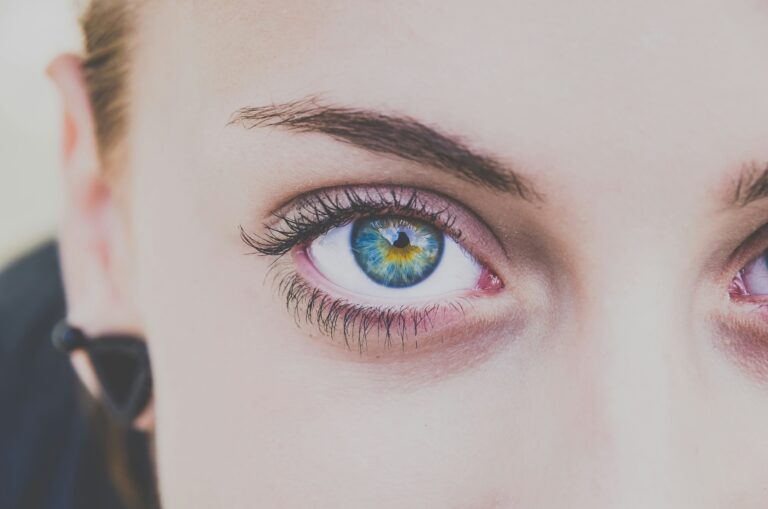
It is a fascination that spans ages and cultures. The blue gaze, often described as “azure” or “ocean eyes,” exerts an almost magnetic power of attraction.
Why this craze? Firstly, for its rarity: only 8% to 10% of the world’s population naturally possesses blue eyes. In the collective unconscious, this hue is associated with purity, clarity, and a certain angelic softness.
Today, amplified by Instagram filters and fashion icons, the demand to obtain blue eyes has exploded. But moving from dream to reality is not a trivial act. If nature has not endowed you with this recessive gene, science offers solutions.
But beware: between harmless temporary methods and dangerous surgeries, there is a world of difference. This complete guide aims to enlighten you on all options for obtaining blue eyes, focusing on the only permanent and secure method recognized today: keratopigmentation.
2. Temporary Methods: Testing Blue Without Commitment
Before considering a permanent modification, many start with fleeting solutions. This is often the first step to validate that blue suits your face and complexion.
2.1 Colored Contact Lenses (The Classic Solution)
This is the most accessible option. To transform a dark brown eye into light blue, opaque lenses are imperative. “Enhancement” lenses (translucent) will not be enough to cover a dark base.
- The Pros: Immediate, reversible, and inexpensive to purchase. The choice of shades is infinite (sapphire blue, gray-blue, turquoise).
- The Major Cons: The look is often artificial up close (the lens pattern is visible). Above all, daily wear is restrictive. It exposes you to real medical risks: conjunctivitis, keratitis (inflammation of the cornea), and intolerance after a few years. Living with foreign bodies in your eyes is not a comfortable lifelong solution.
2.2 Makeup and Digital Filters (The Illusion)
For those who cannot tolerate lenses, there are visual tricks.
- Makeup: Using copper or orange eyeshadows (complementary colors to blue) can make blue-gray eyes pop, but will never change a brown eye to blue.
- Filters (TikTok, Snapchat): They are excellent for simulation. Before coming to see us for surgery, we often advise using these filters to get used to your new face. It is a powerful psychological tool to confirm your desire for change.
3. Permanent Methods: Beware of Dangers!
This is where vigilance is required. Not all surgeries to “get blue eyes” are created equal. Some are even banned or strongly advised against by the ophthalmological community.
3.1 Laser Iris Depigmentation (Stroma Type Technique)
This method promises to transform brown eyes into blue by “burning” the layer of brown melanin covering the iris (because hidden under every brown eye is a blue eye).
- Why it’s risky: By destroying melanin, the laser releases pigment debris into the eye. This debris clogs the trabecular meshwork (the eye’s filter), causing a rise in eye pressure.
- The Verdict: High risk of pigmentary glaucoma and chronic uveitis. This technique lacks long-term data and safety validation in France.
3.2 Colored Iris Implants (NewColorIris, BrightOcular)
This involves inserting a blue silicone disc directly into the eye, in front of your natural iris.
- MAXIMUM DANGER: This is the most dangerous technique. The implant rubs against internal structures, destroys corneal cells, and causes acute glaucoma.
- Consequence: Many patients end up losing part of their vision, must have the implant removed urgently, and sometimes undergo a corneal transplant. Avoid at all costs.
3.3 Keratopigmentation: The Only Safe Solution
Faced with the failures of other techniques, keratopigmentation has established itself as the reference.
- The Fundamental Difference: It is an extraocular technique. We do not touch the iris; we do not penetrate the anterior chamber of the eye. We inject a biocompatible blue pigment into the thickness of the cornea. The functional integrity of the eye is preserved.
4. Focus: Keratopigmentation for Perfect Blue Eyes
At FLAAK, we have refined this technique to offer stunningly natural results. Here is how we proceed to give you the azure gaze of your dreams.
4.1 The Step-by-Step Procedure
Forget general anesthesia and long hospital stays.
- The Assessment (Day-X): We perform a complete mapping of your eyes (OCT, topography) to check your corneal thickness. Together, we simulate the ideal blue shade.
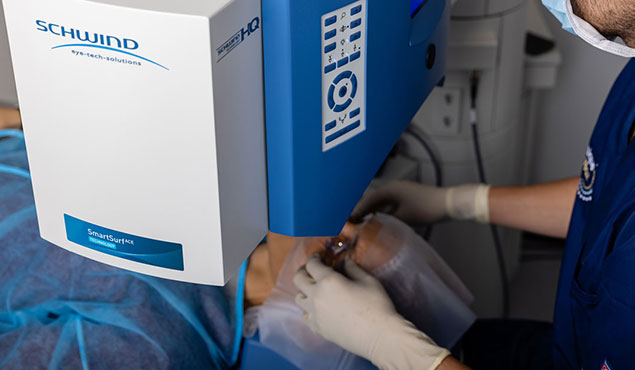
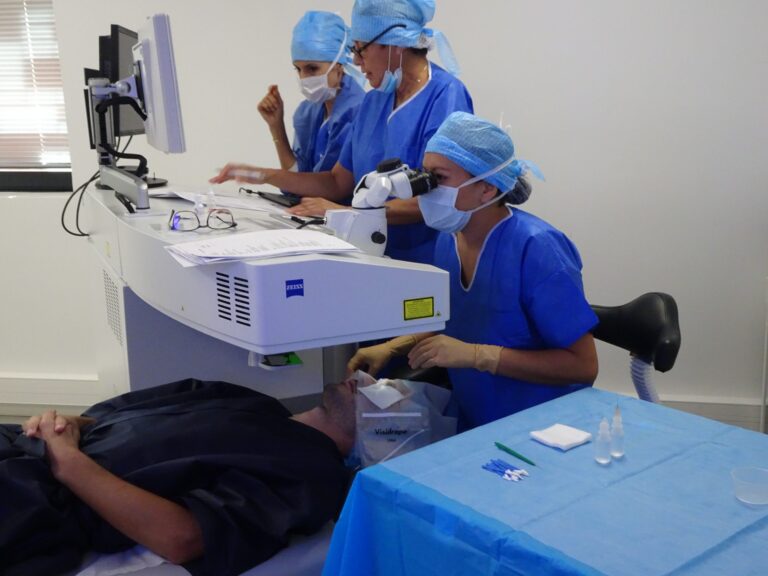
- The Intervention (D-Day): Under simple local anesthesia (drops), the surgeon uses a high-precision femtosecond laser to create a circular micro-tunnel in the cornea. It takes a few seconds and is painless.
- The Coloring: The certified blue pigment is delicately injected into this tunnel. It covers your natural iris color via a masking effect.
- Total Duration: About 30 to 45 minutes for both eyes. You leave the same day.
4.2 Which Shade of Blue to Choose?
“Blue” is not unique. We offer a customizable palette to adapt to your complexion.
| Shade | Visual Description | Ideal for… |
| Riviera Blue (Sky) | A light, luminous, and soft blue. | Fair complexions or to soften a face with sharp features. |
| Lagoon Blue (Ocean) | An intense, saturated, vibrant blue. | Those who want a radical change and a magnetic gaze. |
| Glacier Blue (Ice) | A very pale blue, leaning towards gray/white. | Dark or black skin tones for a striking contrast (“Husky” effect). |
| Midnight Blue (Deep) | A dark, discreet, and elegant blue. | A subtle and undetectable result. |
4.3 Risks and Realities
Although safe, keratopigmentation remains a surgical act.
- Classic Side Effects: “Grain of sand” sensation for 24h, slight sensitivity to light (photophobia) for the first few days.
- Night Halos: Some patients perceive halos around lights at night. This phenomenon generally fades over time (neuro-adaptation).
- Reversibility: If you change your mind, it is possible to fade the color or change the shade (within certain limits), which is impossible with laser depigmentation.
5. Why Choose French Keratopigmentation (FLAAK)?
If you are determined to have blue eyes, the choice of clinic is crucial.
Drastic Safety Standards
Unlike low-cost medical tourism, we operate under French standards. Our pigments are CE marked, traceable, and tested for non-toxicity. Our operating theater respects ISO sterility standards. You do not play Russian roulette with your eyes.
A Fair Price: Accessible Excellence
Getting blue eyes has a price, but it shouldn’t be crazy.
- USA: $12,000 to $15,000 (for the same technology).
- Low-Cost (Turkey): €3,000 (but with which pigments? What follow-up?).
- FLAAK (Paris): Between €5,500 and €7,000. This “all-inclusive” rate includes the assessment, surgery, medications, and crucially, one year of medical follow-up. It is the best safety/price ratio on the global market.
Local Follow-up
Having blue eyes is good. Keeping good eyesight is better. Our clinic in Paris ensures your post-operative checks. In case a small touch-up is needed to perfect the intensity of the blue, we are here.
6. Testimonials: They Dared the Blue
Karim, 34 years old – Glacier Blue
“I wore blue contact lenses for 10 years. My eyes were red every night. With keratopigmentation, it’s a liberation. The result is incredible, especially in the sun. My friends think it’s natural.”
Élodie, 29 years old – Riviera Blue
“I wanted blue eyes like my mother. I was scared of the operation, but the FLAAK team was great. No pain. Just a bit dazzled that same evening. Today, I look in the mirror and I finally see who I really am.”
7. Ready to Get Your Blue Eyes?
Do not let uncomfortable lenses or virtual filters dictate your appearance any longer. The technology to obtain blue eyes permanently and safely exists, and it is mastered in Paris.
Your journey towards blue starts here:
- Check our before/after gallery.
- Book an appointment for a 3D simulation and eligibility assessment.
- Get your unique gaze with the safety of French expertise.
Request your personalized quote (€5,500 – €7,000) and book your consultation at FLAAK.
Safety and keratopigmentation protocol
Keratopigmentation is performed by a qualified ophthalmologist in a sterile medical environment in Paris. The procedure uses the VisuMax Zeiss femtosecond laser, a cutting-edge technology that creates an intracorneal tunnel with micrometric precision. The biocompatible pigments used are CE-certified and specifically designed for ophthalmic use, ensuring optimal tissue tolerance.
Unlike iris implants or permanent colored contact lenses, keratopigmentation does not affect the internal structures of the eye. The pigment remains confined within the corneal thickness, with no contact with the crystalline lens or the anterior chamber. This approach significantly minimizes risks of intraocular inflammation, glaucoma, or cataracts. The entire procedure takes approximately 30 minutes under topical anesthesia, completely painless.
A comprehensive preoperative assessment including corneal topography, pachymetry, and fundus examination is systematically performed before any intervention. This assessment confirms patient eligibility and allows personalization of the desired eye color change through a realistic 3D simulation.
Results and post-operative care
The permanent results of keratopigmentation are visible within the first hours following the procedure. The new eye color achieved is stable, natural-looking, and lasting. Patients notice an immediate change that fully stabilizes within 2 to 4 weeks, once corneal healing is complete.
Post-operative follow-up includes consultations at D+1, D+7, D+30, and D+90. Antibiotic and anti-inflammatory eye drops are prescribed for 2 to 4 weeks. Daily activities can be resumed the next day, with simple precautions: avoid eye makeup for one week and wear sunglasses outdoors.
The before after results speak for themselves: thousands of satisfied patients worldwide have benefited from this technique. The keratopigmentation fee is 5,500 EUR for both eyes, including the preoperative assessment, the procedure, and complete follow-up care. A free consultation allows you to evaluate your eligibility and visualize the expected outcome.