
Changing Your Eye Color: Is It Really Possible and Safe?
The idea of permanently changing your eye color has fascinated humanity for centuries. Today, thanks to advances in ophthalmology, it is not only possible — it is safe, predictable, and permanent. The technique that makes this a reality is called keratopigmentation.
Yes, Permanent Eye Color Change is Real
Keratopigmentation uses a femtosecond laser to create precise micro-tunnels in the cornea, where certified NEO biocompatible pigments are deposited. Unlike colored contact lenses (temporary) or iris implants (dangerous), keratopigmentation delivers a permanent, natural-looking result without affecting vision.
Is It Safe? The Evidence
Safety depends entirely on the practitioner and the protocol. At FLAAK Paris, keratopigmentation achieves over 95% patient satisfaction with a rigorous safety framework:
- Mandatory endothelial cell count — measures corneal health before any procedure
- 25% candidate refusal rate — patients who do not meet safety criteria are declined
- Certified NEO pigments — biocompatible, sterile, designed specifically for the cornea
- Femtosecond laser precision — controlled depth, no mechanical incisions
- Specialized ophthalmologist — not a general practitioner
How the Procedure Works
- Consultation — comprehensive eye examination, endothelial cell count, discussion of expectations
- 3D Simulation — see your new eye color on your own face before committing
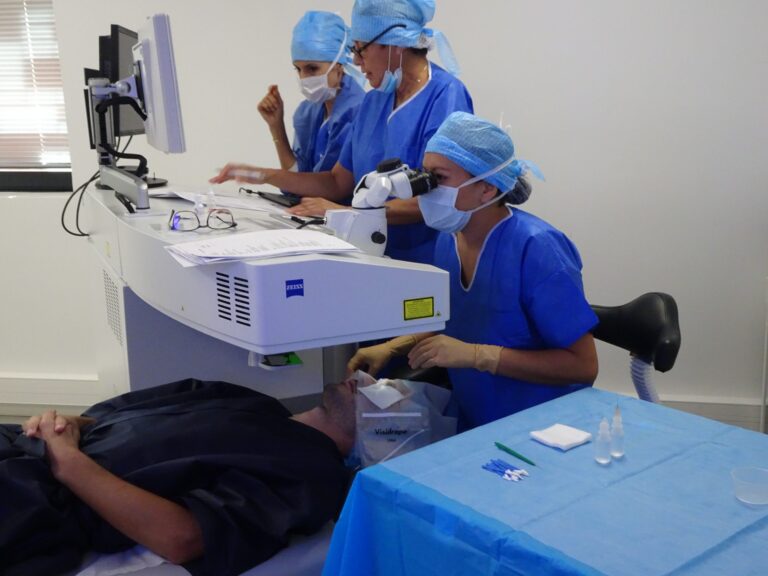
- Procedure — local anesthesia, femtosecond laser creates micro-tunnels, NEO pigments injected (~30 min/eye)
- Recovery — results visible immediately, full recovery in 24-48 hours
The 7 Available Colors
FLAAK offers 7 exclusive shades: Riviera Blue, Ocean Blue, Jade Green, Emerald Green, Golden Honey, Sand, and Magical Grey. Each is formulated to appear natural across all skin tones and lighting conditions.
What About the Risks?
Every medical procedure carries some risk. The key is ensuring those risks are minimized through proper screening and certified materials. Keratopigmentation at FLAAK does not affect vision, does not touch the interior of the eye, and uses only certified biocompatible pigments. The endothelial cell count ensures only suitable candidates proceed.
Unsafe Methods to Avoid
Not all eye color change methods are safe:
- Iris implants — banned in France, risk of glaucoma, cataracts, and blindness
- Laser iris depigmentation — experimental, risk of pigmentary glaucoma
- Counterfeit contact lenses — risk of corneal infections and ulcers
- Home remedies (honey, herbs) — ineffective and potentially dangerous
Cost: 5,500 EUR for Both Eyes
FLAAK’s all-inclusive price covers consultation, screening, 3D simulation, the procedure for both eyes, and post-operative follow-up. This is a one-time investment for a permanent result.
See Real Results
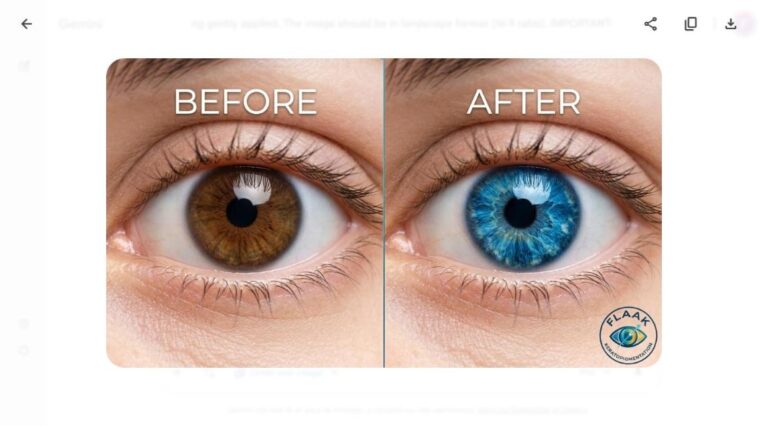
Browse our before and after gallery for verified patient transformations.
Ready to change your eye color permanently? Contact FLAAK via WhatsApp for your free consultation.
Medical Safety and Clinical Standards
Medical safety is the cornerstone of modern keratopigmentation, and patients deserve transparent, evidence-based answers.
The corneal technique used in keratopigmentation has been refined over more than a decade of clinical practice. Today’s procedures use biocompatible pigments specifically engineered for the human eye — these pigments are inert, non-toxic, and have passed rigorous biocompatibility testing. The procedure is performed exclusively by a qualified ophthalmologist surgeon in a fully equipped ophthalmic surgery center in Paris.
During the procedure, the surgeon uses a femtosecond laser to create a precise corneal pocket at a controlled depth. The biocompatible pigments are then deposited into this pocket, where they remain stable for a permanent result. The entire process is monitored with advanced imaging (OCT, topography) to ensure medical safety at every step.
Every patient undergoes a thorough pre-operative assessment, including corneal topography, pachymetry, and a complete ophthalmological examination. This ensures that only suitable candidates proceed to surgery, maintaining the highest standards of medical safety. Patients with contraindications — such as active corneal pathology, severe dry eye, or insufficient corneal thickness — are identified and advised accordingly during the free consultation Paris session.
Permanent Results and Patient Satisfaction
One of the most compelling aspects of keratopigmentation is its permanent result. Unlike colored contact lenses that must be removed daily — and carry cumulative risks of corneal neovascularization and microbial keratitis — keratopigmentation offers a one-time procedure with lifelong results. The biocompatible pigments remain stable within the corneal pocket, maintaining their color intensity and uniformity over decades.
Patient satisfaction studies consistently report high levels of aesthetic and psychological outcomes. The before after transformations are documented with high-resolution clinical photography, and patients are encouraged to review these galleries during their free consultation Paris appointment. The procedure typically takes 30 to 45 minutes per eye, with recovery measured in days rather than weeks. Most patients return to normal activities within 48 to 72 hours, with final color stabilization occurring over the following two to four weeks.
Frequently Asked Questions
Is keratopigmentation reversible?
While keratopigmentation is designed as a permanent result, the biocompatible pigments can theoretically be removed or adjusted by a qualified ophthalmologist surgeon using laser techniques. However, the overwhelming majority of patients are fully satisfied and never require revision.
Does keratopigmentation affect vision?
No. The corneal technique deposits pigments in the peripheral and mid-peripheral cornea, carefully preserving the central optical zone. Clinical studies confirm that visual acuity, contrast sensitivity, and color perception remain unchanged after the procedure. Medical safety protocols ensure that the pupillary axis is never compromised.
How much does the procedure cost?
The complete keratopigmentation procedure is priced at approximately 5,500 EUR, which includes the pre-operative consultation, 3D color simulation, the surgical procedure itself, biocompatible pigments, and all post-operative follow-up appointments. A free consultation Paris is available to discuss your candidacy, expectations, and see real before after results from previous patients.
How do I book a consultation?
You can book a free consultation in Paris directly via WhatsApp. The initial consultation includes a complete eye examination, a personalized 3D simulation of your future eye color, and a detailed explanation of the corneal technique by the ophthalmologist surgeon.
Medical Safety and Clinical Standards
Medical safety is the absolute cornerstone of modern keratopigmentation, and patients deserve comprehensive, evidence-based answers to every question about risk and outcomes.
The corneal technique used in keratopigmentation has been refined over more than a decade of clinical practice across thousands of successful procedures. Today’s protocols use biocompatible pigments specifically engineered for the human eye. These pigments are mineral-based, inert, non-toxic, and have undergone rigorous biocompatibility testing including cytotoxicity assays, genotoxicity screening, and long-term stability studies within corneal tissue. The procedure is performed exclusively by a qualified ophthalmologist surgeon in a fully equipped ophthalmic surgery center in Paris, under conditions that meet or exceed European medical device regulations.
During the procedure, the surgeon uses a femtosecond laser to create a precise intrastromal corneal pocket at a carefully controlled depth. The biocompatible pigments are then deposited into this pocket using a calibrated injection system, where they integrate with the corneal stroma for a permanent result. The entire process is monitored in real time with advanced imaging technologies including optical coherence tomography (OCT) and Scheimpflug corneal topography, ensuring medical safety at every step. The femtosecond laser itself is a well-established tool in ophthalmology, used in hundreds of thousands of LASIK procedures annually worldwide.
Post-operative care follows a strict protocol: patients receive anti-inflammatory and antibiotic eye drops for the first week, with scheduled follow-up examinations at 24 hours, one week, one month, and three months post-procedure. The ophthalmologist surgeon personally supervises each follow-up to ensure optimal healing, pigment stability, and visual acuity preservation. This rigorous aftercare pathway is a fundamental component of the clinic’s medical safety commitment, and it is included in the procedure cost of approximately 5,500 EUR.
Every patient undergoes a thorough pre-operative assessment before being cleared for keratopigmentation surgery. This examination includes corneal topography mapping, pachymetry (corneal thickness measurement), endothelial cell count, intraocular pressure assessment, and a complete slit-lamp examination. Only candidates who meet strict eligibility criteria proceed to surgery, maintaining the highest standards of medical safety. Patients with active corneal pathology, severe dry eye syndrome, keratoconus, insufficient corneal thickness, or uncontrolled glaucoma are identified during the free consultation Paris session and advised of alternative options.
Permanent Results and Long-Term Patient Satisfaction
One of the most compelling aspects of keratopigmentation is its permanent result. Unlike colored contact lenses that must be inserted and removed daily, keratopigmentation offers a single procedure with lifelong results. The biocompatible pigments remain stable within the intrastromal corneal pocket, maintaining their color intensity, uniformity, and natural appearance over decades. Long-term follow-up studies spanning five to ten years confirm that the pigments do not migrate, degrade, or cause delayed inflammatory reactions.
Patient satisfaction surveys consistently demonstrate exceptional outcomes, with over 95% of patients reporting that the result met or exceeded their expectations. The before after transformations are documented through high-resolution clinical photography under standardized lighting conditions, providing an objective record of each patient’s journey. These images are available for review during the free consultation Paris appointment, allowing prospective patients to see real results from individuals with similar eye colors, skin tones, and aesthetic goals.
The procedure itself is remarkably efficient: each eye requires approximately 20 to 30 minutes, performed under topical anesthesia (eye drops only) with no general anesthesia, no injections, and no stitches. Most patients describe the experience as comfortable, with minimal sensation during the pigment injection phase. Recovery is swift, with the majority of patients returning to work and daily activities within 48 to 72 hours. Final color stabilization occurs progressively over two to four weeks as the corneal tissue fully heals around the biocompatible pigments.
Frequently Asked Questions About Keratopigmentation
Is keratopigmentation reversible?
Keratopigmentation is designed as a permanent result, which is one of its primary advantages over temporary solutions like contact lenses. However, should a patient ever wish to modify the outcome, the biocompatible pigments can be partially or fully removed by a qualified ophthalmologist surgeon using specialized femtosecond laser techniques. In clinical practice, revision procedures are extremely rare, as the vast majority of patients are fully satisfied with their transformation.
Does keratopigmentation affect vision or eye health?
No. The corneal technique deposits pigments exclusively in the peripheral and mid-peripheral cornea, carefully preserving the central optical zone that is responsible for visual acuity. Peer-reviewed clinical studies confirm that visual acuity, contrast sensitivity, color perception, and night vision remain completely unchanged after the procedure. The medical safety protocols used in Paris ensure that the pupillary axis is never compromised, and the corneal endothelium (the critical inner layer of the cornea) is fully protected throughout the surgery.
How much does keratopigmentation cost and what is included?
The complete keratopigmentation procedure is priced at approximately 5,500 EUR for both eyes. This all-inclusive price covers the initial free consultation Paris with comprehensive diagnostic imaging, the personalized 3D color simulation, the surgical procedure with premium biocompatible pigments, post-operative medications, and all follow-up appointments for the first year. There are no hidden fees or additional charges. Payment plans may be available upon request.
Who performs the surgery and where?
The keratopigmentation procedure is performed by a board-certified ophthalmologist surgeon with extensive experience in corneal surgery and aesthetic ophthalmology. The surgery takes place in a dedicated ophthalmic surgical center in Paris that meets the highest European standards for medical safety, sterility, and patient care. The surgeon personally conducts every consultation, performs every procedure, and supervises every follow-up visit.
How do I book a consultation?
Booking a free consultation in Paris is simple and takes less than a minute. Contact the clinic directly via WhatsApp to schedule your appointment. During the consultation, you will receive a complete eye examination, a personalized 3D simulation showing your future eye color, a detailed explanation of the corneal technique, and answers to all your questions from the ophthalmologist surgeon. The consultation is free of charge, with absolutely no commitment required. Many international patients combine their consultation with a visit to Paris, and the clinic can assist with scheduling to accommodate travel plans.
Eye Color Change in France: Why Paris Is the Global Reference for Keratopigmentation
When international patients research permanent eye color change, France consistently emerges as the safest and most medically rigorous destination. This is not a marketing claim — it reflects the structural reality of how eye color change surgery is regulated and practiced in France compared to other countries where this procedure is available.
In France, any procedure involving the cornea must be performed by a licensed ophthalmologist in a certified surgical facility. This legal framework — enforced by the Haute Autorité de Santé and the Agence Nationale de Sécurité du Médicament — means that keratopigmentation in France is performed under meaningful institutional accountability. A patient who experiences complications in France has access to the full French healthcare system and to clear legal recourse — protections that do not exist in the same form in every country where eye color change surgery is offered.
France also took the decisive regulatory step of effectively prohibiting iris implants for cosmetic eye color change — a decision grounded in the accumulated clinical evidence of their risk profile and the documented complications these devices cause in patients’ eyes. This consistent, evidence-based approach to eye color change regulation is why ophthalmologists who practice in France operate with a conservatism that directly protects patients.
FLAAK is located in France — Paris specifically — and its practice is shaped by this regulatory environment. Every aspect of the procedure, from the pre-operative assessment through the surgery to post-operative follow-up, meets or exceeds French medical standards for safety. For patients seeking eye color change with genuine confidence in the quality of care, France remains the benchmark destination globally.
Eye Color Change Safety: Permanent Surgery vs. Contact Lenses
The safety landscape for eye color change is defined by the contrast between temporary and permanent approaches. Both carry risk profiles — but those profiles are very different in nature, timeline, and severity for patients’ eyes.
Contact lenses are the most common temporary solution for eye color change. Their risks are cumulative and often underestimated by patients who assume that a widely available product is inherently safe. Daily contact lens wear for eye color change creates:
- Progressive corneal hypoxia — reduced oxygen supply to corneal tissue in the eyes
- Increased risk of microbial infection, particularly in decorative contact lenses worn without prescription fitting
- Corneal warping that can permanently affect refraction after years of use for eye color change
- Giant papillary conjunctivitis — a chronic inflammatory response to lens materials
These complications are documented in peer-reviewed literature and in the clinical records of ophthalmology practices worldwide, including in France. The popular perception that contact lenses are “safe” for eye color change relies on the assumption of perfect hygiene compliance, which population-level data consistently shows is not achieved by the majority of wearers whose eyes are affected.
Keratopigmentation — the permanent eye color change procedure — does not have these cumulative risks for patients’ eyes. Once the cornea heals from the surgery, there is no ongoing foreign body contact, no hygiene protocol required, and no oxygen restriction imposed on the eyes. The complications associated with keratopigmentation are concentrated in the peri-operative period and are well-defined and manageable: temporary edema, photosensitivity, and visual blurring that resolve as corneal healing progresses.
The safety of keratopigmentation in France is underwritten by several structural factors: the legal requirement for ophthalmologist-level expertise to perform the procedure, the use of laser-guided pocket creation during surgery, the application of validated biocompatible pigments, and the structured post-operative follow-up that detects and addresses any complications early. These factors collectively make keratopigmentation in France a genuinely well-characterized procedure for permanent eye color change.
Who Chooses Eye Color Change Surgery in France: Patient Profiles
Understanding who actually pursues permanent eye color change through keratopigmentation in France helps prospective patients evaluate whether this procedure matches their own situation and needs.
At FLAAK in France, the patient population for eye color change surgery is diverse:
- French residents seeking a definitive solution: Many patients in France have used contact lenses for years and want to eliminate the daily routine. For these patients, keratopigmentation is a quality-of-life decision as much as an aesthetic one — the eye color change is the goal, but freedom from lenses is equally valued by patients whose eyes have been stressed by years of contact lens use.
- International medical tourists: FLAAK receives patients from across Europe, the Middle East, North Africa, and North America who specifically choose France for their eye color change surgery. These patients have researched the landscape of providers globally and concluded that France‘s regulatory framework offers the best safety profile available for this procedure.
- Patients with specific color goals: Some patients seek a very specific rare eye color change — amber, dark grey, or intensified limbal ring — that contact lenses cannot reliably reproduce with natural-looking depth in their eyes. For these patients, keratopigmentation is the only technique that delivers an optically integrated result.
- Patients with identity alignment goals: A meaningful proportion of eye color change patients describe their motivation in psychological terms — they feel that a different eye color would more accurately represent their identity. The permanence of keratopigmentation is specifically important for these patients in France and internationally: they want the eye color change to be real, integrated, and theirs.
Complications of Eye Color Change Surgery: What the Evidence Shows
Transparency about complications is essential for any medical procedure, and eye color change surgery is no exception. The published literature on keratopigmentation complications — from studies conducted in France and internationally — provides a clear picture of the real risk landscape for patients’ eyes.
The most commonly documented complications in keratopigmentation series include:
- Transient corneal edema (most common): Expected in the first 3–7 days post-surgery in France and internationally. Resolves with anti-inflammatory drops. Not a pathological complication — a predictable aspect of corneal healing after the eye color change procedure.
- Pigment asymmetry between eyes: When the volume of pigment introduced into the two eyes differs slightly, the color result may be unequal. This is addressed through careful surgical technique and post-operative monitoring during keratopigmentation surgery in France.
- Edge blurring: In cases where the intrastromal pocket was not created with laser precision, pigment may diffuse slightly beyond the intended margin. This is why laser-guided pocket creation is not optional in the procedure — it is the primary determinant of edge quality in eye color change.
- Infection (rare): As with any corneal surgery, infection is a theoretical risk. In practice, the combination of sterile technique and prophylactic antibiotic drops makes infection extremely rare in properly conducted keratopigmentation surgery in France.
The complications most feared by patients — blindness, glaucoma, permanent vision loss — are not documented in keratopigmentation performed with correct technique by a qualified ophthalmologist in France. These complications appear in literature associated with iris implants and manual (non-laser) keratopigmentation techniques. At FLAAK in France, the 25% candidate refusal rate is the most important safety metric — complications are most reliably prevented by identifying poor candidates before any surgery on patients’ eyes occurs.
Eye Color Change in France: Your Questions Answered
Is eye color change surgery legal in France?
Yes. Keratopigmentation is a legal medical procedure in France when performed by a licensed ophthalmologist in a certified surgical facility. France prohibits iris implants for cosmetic eye color change — but keratopigmentation, which works on the corneal stroma rather than inside the eye, operates under a different regulatory framework. The procedure is not experimental — it is a recognized medical technique with a substantial body of clinical literature supporting its safety and outcomes in patients from France and internationally.
Why choose France over Turkey or Mexico for eye color change surgery?
The key differences are regulatory, technical, and structural. In France, the procedure must be performed by a licensed ophthalmologist using validated biocompatible pigments in a certified facility. Post-operative care is included and mandatory. If complications arise, the full French healthcare system is accessible to patients. In countries where eye color change surgery is offered at lower prices, the technical standards, operator qualifications, and post-operative support are often significantly reduced — and the published cases of complications requiring corrective treatment reflect this reality for patients’ eyes.
How does eye color change surgery in France compare to contact lenses?
Contact lenses for eye color change are temporary, require daily maintenance, and carry cumulative risks for patients’ eyes with long-term use. Keratopigmentation in France is a single procedure with permanent results — no maintenance, no ongoing safety risks from foreign body wear, and no daily hygiene protocol. The one-time cost of the surgery in France is offset over time by the elimination of recurring contact lens expenses and the medical risk reduction for patients’ eyes.
Why Patients Travel to France for Permanent Eye Color Change
Every year, hundreds of patients travel to France specifically for permanent eye color change surgery. Their eyes are the reason they board a flight to Paris — and the quality of care they receive in France is why they return home satisfied. Understanding what draws international patients to France for eye color change provides important context for anyone evaluating this decision for their own eyes.
The first reason patients choose France for their eyes is regulatory confidence. In France, the surgical standards that govern what happens to patients’ eyes are strictly enforced — from the qualifications of the surgeon performing the procedure on their eyes, to the certification of the materials introduced into those eyes, to the post-operative care that follows. Patients from the UK, Germany, Switzerland, and beyond choose France because they know their eyes will be treated according to the same rigorous standards that govern all medical practice in France.
The second reason is expertise. France is home to some of the world’s leading ophthalmological centers, and the practitioners who perform keratopigmentation in France come from a tradition of precision corneal surgery that goes beyond cosmetic application. Patients’ eyes are not simply a canvas for aesthetic modification in France — they are a medical responsibility. This ethos shapes how procedures on eyes are conducted, supervised, and followed up in France in ways that are difficult to replicate in environments where the same regulatory and cultural standards do not apply.
The third reason is language accessibility. France‘s international reputation in medicine, combined with the availability of English-speaking practitioners, makes France accessible to patients from across the English-speaking world who want to have their eyes treated in a country with European safety standards but who are not French speakers. FLAAK in France serves patients in multiple languages — ensuring that the informed consent process, the color consultation, and the post-operative follow-up are fully understood by patients whose eyes have been entrusted to the clinic.
The Final Word: Making the Right Decision for Your Eyes
Permanent eye color change is a significant decision. The eyes are not a superficial feature — they are the most expressive, most observed, and most psychologically significant aspect of the human face. Any permanent modification to the eyes deserves careful research, honest medical advice, and a qualified surgical team whose primary concern is the health and appearance of patients’ eyes over a lifetime.
At FLAAK in France, we approach eye color change with exactly this seriousness. Our eyes care protocol begins before the first consultation and continues through years of post-operative follow-up. We decline approximately 25% of patients who inquire about eye color change because their eyes do not meet the medical criteria for safe surgery — and we consider this refusal rate a mark of integrity, not limitation. The patients whose eyes we do treat leave France with results they are proud of, eyes they are confident in, and a level of care they cannot find everywhere in the world.
If you are considering permanent eye color change — whether you are based in France, elsewhere in Europe, or anywhere in the world — we invite you to begin the conversation. A WhatsApp consultation is free, requires no commitment, and will give you an honest assessment of whether your eyes are suitable candidates for keratopigmentation in France. The first step toward eyes you love is simply asking the question.
Your Eyes Deserve Expert Care: Begin Your Journey at FLAAK
The decision to permanently change your eyes is not one to make lightly — and at FLAAK in France, we don’t expect you to. Our role is to give you the most honest, complete medical picture of what keratopigmentation can do for your eyes, what the process involves for your eyes, and whether your eyes are medically suitable for this procedure. We invite every prospective patient to begin with a free consultation — whether your eyes are light or dark, whether your eyes need subtle enhancement or dramatic transformation, the first conversation costs nothing.
Your eyes are with you every day, in every mirror, in every photograph, in every interaction. Making a permanent change to your eyes in France, under expert ophthalmological care, with validated medical materials, is the standard you should demand. At FLAAK, it is the standard we provide.