
The History of Changing Eye Color: From Ancient Rome to the Parisian Laser
The desire to change eye color is as old as civilization itself. From ancient cosmetic tricks to modern laser technology, humanity’s quest for different-colored eyes spans millennia. This is the fascinating story of how we arrived at today’s safe, permanent solution: keratopigmentation.
Ancient World: The First Attempts
Ancient Rome (1st Century AD)
Roman women used belladonna (deadly nightshade) eye drops to dilate their pupils, making their eyes appear darker and more alluring. The name “belladonna” literally means “beautiful woman.” While this did not change iris color, it was the first documented attempt to modify eye appearance — despite the plant’s toxicity.
Ancient Egypt
Egyptians used kohl and malachite around their eyes to create the illusion of different eye colors through contrast. Cleopatra’s famous eye makeup was as much about color illusion as it was about beauty and sun protection.
19th Century: The Birth of Contact Lenses
In 1887, German glassblower F.E. Muller created the first known glass contact lens. By the early 20th century, scientists began experimenting with tinted lenses. The first commercial colored contact lenses appeared in the 1980s, finally offering a temporary but practical way to change apparent eye color.
20th Century: Surgical Attempts
Iris Implants (2000s)
BrightOcular and similar companies introduced artificial iris implants — colored silicone discs placed inside the eye. Initially popular, these devices were soon linked to serious complications: glaucoma, cataracts, endothelial cell loss, and vision loss. They are now banned for cosmetic use in France and many other countries.
Laser Iris Depigmentation (2010s)
Companies like Stroma Medical proposed using lasers to destroy iris melanin, gradually revealing blue color beneath brown pigment. The technique showed promise but raised concerns about pigmentary glaucoma from released melanin particles. It remains unapproved for cosmetic use.
21st Century: The Keratopigmentation Revolution
Medical Origins
Corneal tattooing (the ancestor of keratopigmentation) has been used therapeutically since the 19th century to treat corneal opacities and iris defects. Medical keratopigmentation improved patients’ appearance after eye injuries or diseases.
The Femtosecond Laser Breakthrough
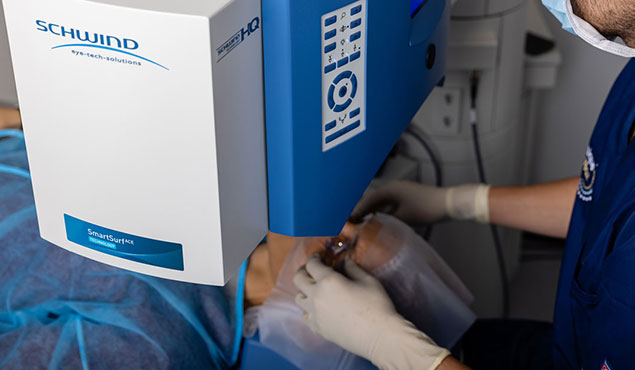
The game-changer came with the application of femtosecond laser technology to corneal pigmentation. Instead of tattooing the corneal surface (imprecise, risky), the femtosecond laser creates precise micro-tunnels at controlled depths within the corneal stroma. This transformed a crude therapeutic technique into a safe, precise aesthetic procedure.
NEO Biocompatible Pigments
The development of pigments specifically designed for corneal integration was the second breakthrough. Unlike generic tattoo inks or therapeutic pigments, NEO biocompatible pigments offer documented long-term stability, safety, and a natural color range.
Paris: The World Capital
Modern aesthetic keratopigmentation was perfected in Paris, where ophthalmological expertise, regulatory rigor, and technological innovation converged. Today, patients from over 30 countries travel to Paris for the procedure. FLAAK represents the pinnacle of this evolution — combining the latest femtosecond laser technology, exclusive NEO pigments, mandatory safety screening, and personalized 3D simulation.
The Present: Safe, Permanent, Accessible
After centuries of dangerous attempts and temporary solutions, keratopigmentation finally offers what humanity has always wanted: a safe, permanent, natural-looking way to choose your eye color. At FLAAK Paris, this dream costs 5,500 EUR for both eyes.
See the results of this centuries-long quest: before and after gallery.
Ready to change your eye color permanently? Contact FLAAK via WhatsApp for your free consultation.
Medical Safety of Keratopigmentation
Keratopigmentation is a medically supervised procedure performed exclusively by a qualified ophthalmologist in a controlled clinical setting. Unlike cosmetic colored contact lenses that carry daily infection risks, keratopigmentation uses biocompatible pigments that are specially formulated for ocular use. These pigments are inserted into the corneal stroma using a femtosecond laser, ensuring precision at the micron level. The procedure has been refined over more than a decade of clinical research and is now considered one of the safest approaches to permanent eye color change.
Before the procedure, every patient undergoes a comprehensive eye examination including corneal topography, pachymetry, and intraocular pressure measurement. This ensures that only suitable candidates proceed. The biocompatible pigments used have been tested extensively in European clinical trials and show excellent long-term stability with no migration or degradation. Post-operative recovery is typically swift — most patients resume normal activities within 48 to 72 hours. The ophthalmologist provides a personalized follow-up protocol to monitor healing and ensure optimal results.
Permanent Results You Can Trust
One of the most compelling advantages of keratopigmentation is that it delivers a permanent result. The pigment is placed within the corneal tissue itself, which means the new eye color does not fade, shift, or require replacement. Whether you choose a natural blue, green, hazel, or a more vibrant shade, the color remains consistent for life. Our clinic in Paris has performed hundreds of successful procedures, and patients consistently report high satisfaction rates both aesthetically and in terms of visual comfort.
The procedure is priced at 5,500 EUR for both eyes, which includes the initial consultation, the procedure itself, premium biocompatible pigments, and all follow-up appointments. This transparent pricing means no hidden costs. Compared to a lifetime supply of colored contact lenses — which can cost thousands of euros over the years while carrying ongoing infection risks — keratopigmentation represents both a safer and more cost-effective choice. Every procedure is performed by a board-certified ophthalmologist with specialized training in corneal surgery.
Frequently Asked Questions
Is keratopigmentation painful? The procedure is performed under topical anesthesia (eye drops), so patients feel no pain. A mild sensation of pressure may be felt, but the actual treatment takes approximately 15 to 20 minutes per eye. Most patients describe the experience as comfortable.
How long do the results last? The results are permanent. Unlike contact lenses that need to be replaced regularly, the biocompatible pigments used in keratopigmentation are designed to remain stable within the cornea indefinitely. Clinical follow-up studies spanning over 10 years confirm long-term color stability.
Can I get a free consultation? Yes. We offer a complimentary initial consultation at our Paris clinic where the ophthalmologist evaluates your candidacy, discusses your desired eye color, and explains every step of the procedure. You can also reach us directly via WhatsApp for a free consultation to get answers to your questions before visiting the clinic.
Safety and keratopigmentation protocol
Keratopigmentation is performed by a qualified ophthalmologist in a sterile medical environment in Paris. The procedure uses the VisuMax Zeiss femtosecond laser, a cutting-edge technology that creates an intracorneal tunnel with micrometric precision. The biocompatible pigments used are CE-certified and specifically designed for ophthalmic use, ensuring optimal tissue tolerance.
Unlike iris implants or permanent colored contact lenses, keratopigmentation does not affect the internal structures of the eye. The pigment remains confined within the corneal thickness, with no contact with the crystalline lens or the anterior chamber. This approach significantly minimizes risks of intraocular inflammation, glaucoma, or cataracts. The entire procedure takes approximately 30 minutes under topical anesthesia, completely painless.
A comprehensive preoperative assessment including corneal topography, pachymetry, and fundus examination is systematically performed before any intervention. This assessment confirms patient eligibility and allows personalization of the desired eye color change through a realistic 3D simulation.
Results and post-operative care
The permanent results of keratopigmentation are visible within the first hours following the procedure. The new eye color achieved is stable, natural-looking, and lasting. Patients notice an immediate change that fully stabilizes within 2 to 4 weeks, once corneal healing is complete.
Post-operative follow-up includes consultations at D+1, D+7, D+30, and D+90. Antibiotic and anti-inflammatory eye drops are prescribed for 2 to 4 weeks. Daily activities can be resumed the next day, with simple precautions: avoid eye makeup for one week and wear sunglasses outdoors.
The before after results speak for themselves: thousands of satisfied patients worldwide have benefited from this technique. The keratopigmentation fee is 5,500 EUR for both eyes, including the preoperative assessment, the procedure, and complete follow-up care. A free consultation allows you to evaluate your eligibility and visualize the expected outcome.
Frequently asked questions about keratopigmentation
Is keratopigmentation painful? No. The procedure is performed under topical anesthesia with eye drops. Patients feel slight pressure during VisuMax Zeiss laser application but no pain. Mild discomfort may persist for a few hours after the operation.
How long do results last? Keratopigmentation delivers permanent results. The biocompatible pigments are encapsulated within the cornea and do not degrade over time. Unlike colored contact lenses, no daily maintenance is required.
Who is eligible for this procedure? Any adult with healthy eyes, after validation by the ophthalmologist during the preoperative assessment. Contact lens wearers must remove them at least 48 hours before the consultation. Patients who have undergone refractive surgery (LASIK, PRK) may be eligible after evaluation.
Why choose Paris for keratopigmentation? Paris is home to Europe’s leading keratopigmentation specialists. Our center exclusively uses the latest generation VisuMax Zeiss and certified biocompatible pigments. The all-inclusive fee is 5,500 EUR, with installment payment options available. Book a free consultation with no commitment today.