
Changing Your Eye Color: The Ultimate Comparison of the 3 Methods (Price, Safety, Results)
When it comes to permanently changing your eye color, the choice of country — and the choice of clinic — may be the most consequential decision you make. Patients from across Europe, the Middle East, and North America increasingly choose Paris, France as their destination for keratopigmentation. This guide breaks down why France stands out, compares the three main methods of eye color change, and explains what FLAAK offers that cannot be replicated elsewhere.
The Three Methods for Changing Eye Color: A Definitive Comparison
Before explaining why France and FLAAK lead the field, it is essential to understand what options actually exist for those seeking a permanent change in eye color. Three methods dominate the current landscape:
- Iris implants (phakic IOL) — A silicone device placed in front of the natural iris inside the anterior chamber of the eye.
- Laser iris depigmentation — A laser treatment that selectively destroys melanin in dark irises, gradually lightening them toward blue or grey tones.
- Keratopigmentation — A surgical procedure that deposits biocompatible pigments into the corneal stroma using a femtosecond laser, permanently changing the apparent iris color.
| Criterion | Iris Implant | Laser Depigmentation | Keratopigmentation (FLAAK) |
|---|---|---|---|
| Permanence | Reversible (removal possible) | Irreversible | Permanent |
| Direction | Any color → any color | Dark → light only | Any color → darker, amber, grey |
| Glaucoma risk | Documented — elevated IOP | Elevated — pigment dispersal | Minimal when technique is correct |
| Corneal impact | None to cornea | None to cornea | Stroma pocket — no surface damage |
| Optical zone impact | Possible (implant position) | None | None (peripheral pigment only) |
| Recovery | 2–4 weeks | Multiple sessions, months | 7–14 days |
| Price at FLAAK | N/A | N/A | From €5,500 |
The comparison above makes clear that keratopigmentation — when performed by a qualified ophthalmologist with a VisuMax femtosecond laser — offers the most favorable safety-to-permanence ratio of the three methods.
Why France Is the Right Country for Eye Color Surgery
France’s regulatory framework for medical practice is among the most rigorous in the world. Any procedure performed inside the eye must be conducted by a licensed ophthalmologist, in a certified surgical facility, using validated medical devices. This legal architecture effectively filters out unqualified operators — a protection that does not exist in every country.
In contrast, several countries where keratopigmentation is offered commercially do not require that the procedure be performed by an ophthalmologist. Some clinics in Turkey, Mexico, and Eastern Europe offer keratopigmentation without femtosecond laser technology — relying instead on manual needle techniques that carry substantially higher risks of infection, corneal perforation, and uneven pigment distribution.
Choosing Paris means choosing a medical environment where:
- The surgeon is legally required to be a board-certified ophthalmologist
- The facility undergoes regular health authority inspections
- Biocompatible pigments meet European pharmaceutical standards
- Post-operative care and liability are governed by French medical law
- Emergency ophthalmological support is available if needed
Why FLAAK Specifically?
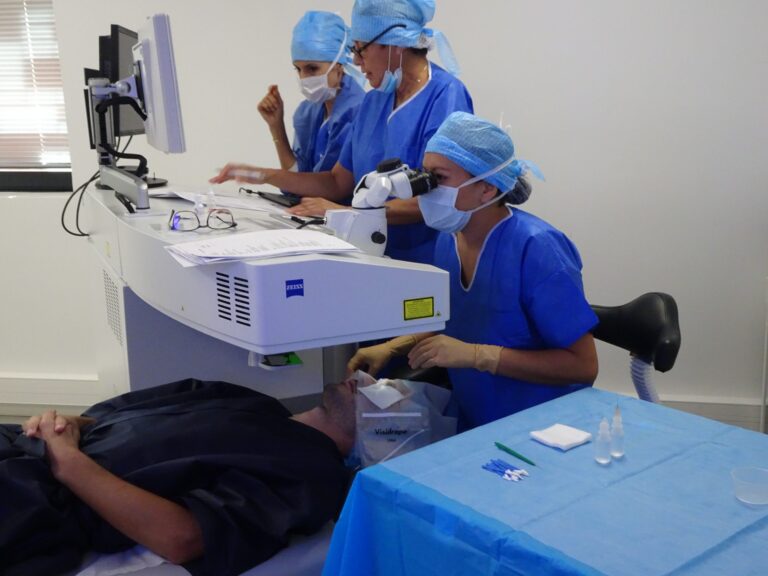
Within France, FLAAK has distinguished itself through its exclusive focus on keratopigmentation and its investment in the VisuMax femtosecond laser platform — the same technology used globally for millions of LASIK and SMILE refractive procedures. This is not a repurposed device; it is precision ophthalmological hardware operated by surgeons who understand corneal anatomy at a level that cosmetic operators simply cannot match.
FLAAK’s approach is characterized by:
- Full ophthalmological workup before every procedure — no exceptions
- Candidacy screening — patients with contraindications are declined, not pushed through
- Digital color simulation — you see your projected result before committing
- Curated biocompatible pigment palette — naturalistic tones designed for iris aesthetics
- Structured post-operative follow-up — at 1 week, 1 month, 3 months minimum
Understanding Keratopigmentation Safety: The Complete Picture
Transparency is a core value at FLAAK. Keratopigmentation is a surgical procedure — and like all surgical procedures, it carries risks. These risks are substantially reduced by correct technique, appropriate technology, and careful patient selection. Here is an honest overview:
Risks That Exist
- Temporary corneal edema (swelling) in the first days post-op — expected and manageable
- Pigment migration if the stromal pocket is insufficiently precise — eliminated with femtosecond laser
- Infection risk — minimized by sterile surgical technique and antibiotic drops
- Asymmetry between eyes if pigment volumes are not perfectly matched — managed through surgical protocol
Risks That Do NOT Apply to FLAAK’s Technique
- Elevated intraocular pressure from iris implants
- Pigment dispersal into the drainage angle (a glaucoma risk specific to laser depigmentation)
- Corneal surface damage from manual needle techniques
- Toxic reactions — FLAAK uses only validated biocompatible pigments
The Cost of Keratopigmentation in Paris vs. Abroad
One of the questions FLAAK receives most frequently is whether it makes sense to travel abroad for a lower price. The answer requires a clear-eyed calculation.
Keratopigmentation at FLAAK starts at €5,500. This price includes the full pre-operative assessment, the surgical procedure on both eyes, all immediate post-operative materials, and the first three follow-up consultations.
Clinics in certain countries advertise keratopigmentation at prices as low as €1,500–€2,500. What is typically not included in that price:
- Pre-operative ophthalmological examination (often additional or skipped)
- Femtosecond laser (manual technique used instead)
- Validated biocompatible pigments (unregulated colorants may be used)
- Post-operative follow-up and support
- Emergency care in case of complication
- Travel, accommodation, and time costs
When complications from poorly performed keratopigmentation require corrective ophthalmological treatment — as documented in multiple published case reports — the cost of that treatment frequently exceeds the “savings” achieved by choosing an unregulated provider.
Who Is a Candidate for Keratopigmentation at FLAAK?
FLAAK’s candidacy assessment begins with a free consultation — available via WhatsApp for international patients. The in-person pre-operative examination then evaluates:
- Corneal thickness and pachymetry mapping
- Endothelial cell count (corneal health marker)
- Intraocular pressure
- Absence of active ocular pathology
- Realistic expectation assessment
Suitable candidates range from those with light eyes seeking a dramatic color change (blue to dark brown, for example) to those with dark eyes seeking intensification via the annular limbal ring technique. FLAAK serves both aesthetic goals with the same surgical rigor.
Frequently Asked Questions
Is keratopigmentation legal in France?
Yes. Keratopigmentation is a medical procedure performed by licensed ophthalmologists within a regulated clinical framework. It is not experimental in the sense that it lacks medical literature — hundreds of peer-reviewed cases have been published documenting its safety and outcomes when performed correctly.
How long does the procedure take?
The surgical time is typically 30–45 minutes for both eyes. The pre-operative preparation and immediate post-operative monitoring add approximately 1–2 hours to the clinic visit.
Is the result truly permanent?
Yes. The biocompatible pigments are deposited within the corneal stroma — a tissue with minimal cellular turnover. Unlike skin tattoos that fade over years, corneal stroma pigmentation shows stable results at 5+ year follow-up in published studies. At FLAAK, we consider the result permanent for the patient’s lifetime.
Can I fly back home the same day?
We recommend staying in Paris for at least 48 hours post-operatively for the first follow-up check. International patients should plan for a minimum 3-day visit. Our team can assist with logistical guidance for medical tourism patients.
The Medical Tourism Experience: Coming to Paris for Eye Color Change
For patients based outside France, choosing Paris for keratopigmentation is increasingly a deliberate medical tourism decision. France’s capital offers not only a world-class medical infrastructure but also the cultural and logistical advantages of one of Europe’s most accessible cities. FLAAK’s patient base includes individuals from the UK, Germany, the Middle East, North Africa, and North America who have specifically sought out Paris as their destination for permanent eye color change.
The typical medical tourism itinerary for a FLAAK patient involves:
- Remote preliminary consultation: Via WhatsApp or video call, before booking travel. Our ophthalmologist reviews your eye photographs, discusses your color goals, and provides an initial candidacy assessment.
- In-person pre-operative day: A full ophthalmological examination on Day 1 of your Paris visit — corneal mapping, endothelial cell count, intraocular pressure, refraction. Results are reviewed the same day.
- Surgery day: Typically Day 2. The procedure takes approximately 30–45 minutes per pair of eyes. Post-operative protective drops are prescribed and a same-day follow-up confirms immediate stability.
- 48-hour check: A short follow-up on Day 3 before departure. For most patients, this is sufficient for international clearance to fly home.
- Remote follow-up: FLAAK offers video consultation follow-ups at J7, J30, and J90 for international patients unable to return to Paris within that timeframe.
Paris vs. Turkey vs. Mexico: Why Geography Matters for Safety
Patients researching keratopigmentation online will encounter clinics in Turkey, Mexico, and various Eastern European countries offering the procedure at significantly lower prices. Understanding why these price differences exist is essential for making a safe decision.
The primary cost differences stem from:
- Technology: Many lower-cost providers do not use the VisuMax femtosecond laser. They use manual cannula techniques without laser-guided pocket creation — a meaningful difference in precision and safety.
- Operator qualification: In France, keratopigmentation must be performed by a licensed ophthalmologist. In some countries, the procedure is offered by operators without ophthalmological credentials.
- Pigment certification: European regulations require that biocompatible pigments used in medical procedures meet specific purity and biocompatibility standards. Products used in unregulated markets may not meet these standards.
- Post-operative support: FLAAK provides structured follow-up care. Clinics in some countries do not include post-operative visits — and if a complication arises after the patient has returned home, the pathway for care is unclear.
Published ophthalmological literature documents cases where patients required corrective treatment following keratopigmentation performed outside regulated medical environments — including cases of pigment migration, corneal infection, and inadequate pocket depth leading to superficial pigment deposition. The cost of corrective ophthalmological care in France — when needed — is substantially higher than the price differential that drove the original choice of a lower-cost provider.
The FLAAK Pigment Palette: Choosing Your New Eye Color
One of the distinctive elements of the FLAAK patient experience is the color selection consultation. Before any commitment to surgery, our ophthalmologist works with each patient to understand their aesthetic goals and match them to available pigment options within our validated palette of biocompatible pigments.
Available color directions at FLAAK include:
- Jet black: Maximum depth — creates an intensely dark iris that reads as truly black in all lighting conditions
- Dark brown: A warm, naturalistic darker brown — suitable for patients seeking a moderate change from lighter irises
- Amber / golden brown: A warm, rare tone with golden undertones — one of the most distinctive results achievable
- Dark grey / slate: A cool-toned deep grey — distinctively modern and uncommon in natural populations
- Annular limbal enhancement: Not a full color change but an intensification of the limbal ring — adding depth and definition to any base color
A digital simulation is performed during the pre-operative consultation, overlaying the projected pigment color on high-resolution photographs of the patient’s own eyes. This simulation allows for an informed, visualized decision before the irreversible step of surgery is taken.
Keratopigmentation at FLAAK is priced from €5,500 for both eyes — all-inclusive of pre-operative workup, surgery, and follow-up care. For patients investing in a permanent change, this represents a definitive solution compared to the ongoing costs and risks of colored contact lenses.
Medical Safety and Clinical Standards
Understanding the full investment behind keratopigmentation helps patients make an informed, confident decision about their eye color transformation.
The pricing of keratopigmentation at approximately 5,500 EUR reflects the convergence of advanced medical technology, premium biocompatible pigments certified for ophthalmic use, and the specialized expertise of the ophthalmologist surgeon performing this delicate corneal technique. Unlike cosmetic shortcuts or unregulated procedures abroad, this investment covers a genuine medical intervention carried out in a sterile surgical environment in Paris, with real-time monitoring of intraocular pressure and corneal integrity throughout the entire operation.
When patients compare keratopigmentation to colored contact lenses, the financial picture shifts dramatically over time. Contact lenses require ongoing purchases of lenses, cleaning solutions, and regular optometrist visits. Over a 10-year period, these recurring costs often exceed the one-time investment in keratopigmentation. More importantly, the permanent result eliminates the hidden medical risks associated with daily lens wear, including corneal neovascularization, microbial keratitis, and allergic conjunctivitis. The economic and health advantages of a single, definitive procedure become clear when viewed through this long-term lens.
The 5,500 EUR investment includes a comprehensive package: the initial free consultation Paris appointment, advanced diagnostic imaging (corneal topography, pachymetry, OCT scan), the personalized 3D color simulation, the surgical procedure itself with premium biocompatible pigments, and all post-operative follow-up visits for the first year. There are no hidden fees, no additional charges for follow-up care, and no surprise costs. This transparent pricing model reflects the clinic’s commitment to patient trust and medical safety.
Every patient undergoes a thorough pre-operative assessment before being cleared for keratopigmentation surgery. This examination includes corneal topography mapping, pachymetry (corneal thickness measurement), endothelial cell count, intraocular pressure assessment, and a complete slit-lamp examination. Only candidates who meet strict eligibility criteria proceed to surgery, maintaining the highest standards of medical safety. Patients with active corneal pathology, severe dry eye syndrome, keratoconus, insufficient corneal thickness, or uncontrolled glaucoma are identified during the free consultation Paris session and advised of alternative options.
Permanent Results and Long-Term Patient Satisfaction
One of the most compelling aspects of keratopigmentation is its permanent result. Unlike colored contact lenses that must be inserted and removed daily, keratopigmentation offers a single procedure with lifelong results. The biocompatible pigments remain stable within the intrastromal corneal pocket, maintaining their color intensity, uniformity, and natural appearance over decades. Long-term follow-up studies spanning five to ten years confirm that the pigments do not migrate, degrade, or cause delayed inflammatory reactions.
Patient satisfaction surveys consistently demonstrate exceptional outcomes, with over 95% of patients reporting that the result met or exceeded their expectations. The before after transformations are documented through high-resolution clinical photography under standardized lighting conditions, providing an objective record of each patient’s journey. These images are available for review during the free consultation Paris appointment, allowing prospective patients to see real results from individuals with similar eye colors, skin tones, and aesthetic goals.
The procedure itself is remarkably efficient: each eye requires approximately 20 to 30 minutes, performed under topical anesthesia (eye drops only) with no general anesthesia, no injections, and no stitches. Most patients describe the experience as comfortable, with minimal sensation during the pigment injection phase. Recovery is swift, with the majority of patients returning to work and daily activities within 48 to 72 hours. Final color stabilization occurs progressively over two to four weeks as the corneal tissue fully heals around the biocompatible pigments.
Frequently Asked Questions About Keratopigmentation
Is keratopigmentation reversible?
Keratopigmentation is designed as a permanent result, which is one of its primary advantages over temporary solutions like contact lenses. However, should a patient ever wish to modify the outcome, the biocompatible pigments can be partially or fully removed by a qualified ophthalmologist surgeon using specialized femtosecond laser techniques. In clinical practice, revision procedures are extremely rare, as the vast majority of patients are fully satisfied with their transformation.
Does keratopigmentation affect vision or eye health?
No. The corneal technique deposits pigments exclusively in the peripheral and mid-peripheral cornea, carefully preserving the central optical zone that is responsible for visual acuity. Peer-reviewed clinical studies confirm that visual acuity, contrast sensitivity, color perception, and night vision remain completely unchanged after the procedure. The medical safety protocols used in Paris ensure that the pupillary axis is never compromised, and the corneal endothelium (the critical inner layer of the cornea) is fully protected throughout the surgery.
How much does keratopigmentation cost and what is included?
The complete keratopigmentation procedure is priced at approximately 5,500 EUR for both eyes. This all-inclusive price covers the initial free consultation Paris with comprehensive diagnostic imaging, the personalized 3D color simulation, the surgical procedure with premium biocompatible pigments, post-operative medications, and all follow-up appointments for the first year. There are no hidden fees or additional charges. Payment plans may be available upon request.
Who performs the surgery and where?
The keratopigmentation procedure is performed by a board-certified ophthalmologist surgeon with extensive experience in corneal surgery and aesthetic ophthalmology. The surgery takes place in a dedicated ophthalmic surgical center in Paris that meets the highest European standards for medical safety, sterility, and patient care. The surgeon personally conducts every consultation, performs every procedure, and supervises every follow-up visit.
How do I book a consultation?
Booking a free consultation in Paris is simple and takes less than a minute. Contact the clinic directly via WhatsApp to schedule your appointment. During the consultation, you will receive a complete eye examination, a personalized 3D simulation showing your future eye color, a detailed explanation of the corneal technique, and answers to all your questions from the ophthalmologist surgeon. The consultation is free of charge, with absolutely no commitment required. Many international patients combine their consultation with a visit to Paris, and the clinic can assist with scheduling to accommodate travel plans.
Keratopigmentation vs. Contact Lenses: A Full Medical Comparison
For patients considering a permanent eye color change, the comparison between keratopigmentation and contact lenses is not simply about aesthetics — it is a medical question with measurable differences in risk, convenience, and long-term outcomes for patients’ eyes.
Contact lenses are the default first choice for most patients exploring eye color change. Their appeal is obvious: accessible, reversible, and available in virtually any eye color imaginable. But contact lenses have a medical cost that compounds with time. Each day of lens wear is a day of oxygen restriction to the cornea (hypoxia), a day of foreign body contact with the ocular surface of the eyes, and a day of infection risk if hygiene is imperfect.
Published research on long-term contact lenses wear documents these risks for patients:
- Corneal neovascularization (growth of blood vessels into the cornea) in chronic lens wearers
- Increased rates of microbial keratitis — a potentially sight-threatening infection in the eyes
- Corneal warping affecting refraction in long-term rigid lens wearers
- Allergic and giant papillary conjunctivitis linked to lens material and solutions
- Cumulative endothelial cell stress from oxygen restriction affecting the iris
None of these risks apply to keratopigmentation. Once the cornea has healed from the keratopigmentation surgery, there is no foreign body, no daily hygiene requirement, and no ongoing oxygen restriction. The eyes function exactly as before — with the addition of the corneal pigment integrated into the stromal tissue giving patients their permanent eye color change.
The aesthetic comparison is equally clear. Contact lenses sit on the corneal surface — and this position means the lens moves with each blink, creating subtle visual artifacts. Experienced observers can often detect colored contact lenses because the iris-lens interface visible at the lens edge creates an unnatural boundary around the eye color. Keratopigmentation deposits pigment within the corneal stroma — the result has the depth and optical integration of a natural iris rather than the surface appearance of contact lenses.
Iris Implants vs. Keratopigmentation: Why the Choice Matters for Patient Safety
Iris implants — silicone devices placed in the anterior chamber of the eye to change its apparent color — were once marketed as a solution for eye color change in patients seeking lighter or more dramatic transformations. The safety record of iris implants has since been thoroughly documented in peer-reviewed ophthalmological literature, with consistently unfavorable findings for patients.
The primary risks associated with iris implants that have driven their prohibition in many countries include significant documented complications for patients’ eyes:
- Elevated intraocular pressure and glaucoma: Implants physically obstruct aqueous humor drainage in many patients, leading to chronically elevated IOP. Glaucoma is documented in a significant percentage of implant patients at 5-year follow-up — and is frequently progressive even after implant removal from the iris.
- Corneal endothelial cell loss: The implant contacts or displaces corneal endothelial tissue. Endothelial cells do not regenerate in eyes — loss is permanent. Many implant patients experience progressive endothelial cell loss that eventually results in corneal decompensation and the need for corneal transplant.
- Cataract formation: The implant disrupts the natural aqueous flow and can lead to anterior subcapsular cataract in patients — a surgery complication not present in keratopigmentation.
- Uveitis: Chronic anterior chamber inflammation is documented in many implant patients, with recurrent episodes that are difficult to fully resolve while the implant remains in the eye.
France has prohibited the commercial use of iris implants for cosmetic eye color change. Keratopigmentation does not enter the anterior chamber — the corneal stroma is an avascular, extracellular environment. The surgery does not involve the aqueous chamber, the trabecular meshwork, or any structure governing intraocular pressure. None of the risks documented for iris implants apply to correctly performed keratopigmentation for patients’ eyes.
Patient Journey Through Keratopigmentation at FLAAK
Understanding the full patient journey through keratopigmentation helps prospective patients set realistic expectations and plan their experience in Paris. The surgery is not an isolated event — it is the central step in a structured process designed to ensure patients’ eyes receive optimal care before, during, and after the eye color change.
Phase 1 — Remote inquiry: Most patients first contact FLAAK via WhatsApp. The ophthalmologist reviews photographs of the patient’s eyes, discusses eye color goals, explains the surgery, and provides an initial candidacy assessment. This remote consultation is free and available to international patients without travel commitment — making keratopigmentation accessible to patients far from Paris.
Phase 2 — Pre-operative examination: Patients who proceed to an in-person visit undergo a complete ophthalmological examination: corneal topography, pachymetry, endothelial cell count, intraocular pressure measurement, and a full slit-lamp assessment of the iris and surrounding structures. Patients with contraindications are identified and advised accordingly — approximately 25% of interested patients are declined on medical grounds to protect the long-term health of their eyes.
Phase 3 — Color simulation: Suitable patients receive a digital color simulation showing the projected eye color result overlaid on high-resolution photographs of their own eyes. Patients and the ophthalmologist collaborate to finalize color selection from the validated biocompatible pigment palette — the choices that create the most natural-looking iris results in keratopigmentation.
Phase 4 — Surgery: The surgery takes approximately 30–45 minutes for both eyes. Patients remain awake under topical anesthesia. The femtosecond laser creates the intrastromal pocket; biocompatible pigments are deposited into the iris zone; the surgery site is sealed without sutures. Patients leave the clinic with protective drops and recovery instructions for their eyes.
Phase 5 — Recovery and follow-up: Patients are scheduled for follow-up at 1 week, 1 month, and 3 months minimum after the surgery. Visual stabilization occurs over 7–14 days. Final color stabilization occurs over 4–6 weeks as the corneal stroma settles around the deposited pigment. Most patients describe their recovery as comfortable — significantly less intensive than many expected from a permanent eye color change surgery.
The risks most frequently discussed during patient consultations — temporary edema, photosensitivity, and visual blurring in the immediate post-operative period — are expected and manageable. They are not indicators of complications but of normal corneal healing in the eyes after the keratopigmentation surgery. Patients who have accurate expectations of the recovery period consistently report higher satisfaction with their eye color change results.
Eye Color Change in France: The Regulatory Context for Patients
France’s regulatory framework for permanent eye color change procedures provides a level of patient protection that does not exist in every country where keratopigmentation is offered. Understanding this context helps patients evaluate the comparative risks of choosing different geographic locations for their surgery.
In France, any intraocular or corneal surgery must be performed by a licensed ophthalmologist in a certified surgical facility. The use of biocompatible materials in medical surgery is governed by European Medical Device Regulations, which require rigorous biocompatibility testing before any material is approved for clinical use with patients’ eyes. These regulations eliminate the possibility of using unvalidated pigments — a risk documented in patients who underwent keratopigmentation in unregulated environments.
France’s position on iris implants — effectively prohibited for cosmetic use — reflects a consistent pattern: French regulatory authorities evaluate risks conservatively and prohibit procedures whose risk profiles are unfavorable for patients’ eyes. Keratopigmentation exists in a different regulatory category — it is a legal medical procedure when performed under the conditions described above. For patients choosing between keratopigmentation in France versus providers in Turkey, Mexico, or other countries, this regulatory context is not abstract. The risks of keratopigmentation in unregulated environments are documented: pigment migration from imprecise pocket creation, corneal infections from non-sterile technique, and inadequate post-operative care for patients who develop complications after their eye color change surgery.
The Eyes as the Ultimate Aesthetic Asset: Why Eye Color Change Matters
Before comparing methods and surgical techniques, it is worth considering why patients seek eye color change in the first place. The eyes are the primary focus of human interpersonal attention — studies in visual psychology confirm that when two people interact, gaze time is distributed overwhelmingly toward the eyes. The color of those eyes, their clarity, and their visual distinctiveness shape first impressions, emotional resonance, and aesthetic identity in ways that no other facial feature can replicate.
This is why patients who are dissatisfied with their eye color describe the feeling in remarkably consistent terms: their eyes don’t match their personality, their eyes don’t reflect who they feel they are, or their eyes are simply forgettable. The eye color change they seek is not vanity — it is alignment. Patients whose eyes become something they are proud of report improvements in self-confidence, social ease, and overall satisfaction with their appearance that extend well beyond the eye color itself.
Against this backdrop, the choice of eye color change method becomes significant not just medically but psychologically. A method that produces a convincing result in the eyes — natural-looking iris color, appropriate depth, stable eye color across lighting conditions — delivers the full psychological benefit that patients seek. A method that produces a visibly artificial result, or that requires constant management (as contact lenses do), diminishes the very benefit the patient is seeking for their eyes.
The color of the eyes changes how people perceive you. It changes how you perceive your own eyes in the mirror. When those eyes are permanently, effortlessly the eye color you chose — through a single surgical procedure rather than a daily routine — the transformation is complete in a way that temporary methods simply cannot achieve. This is the promise of keratopigmentation at FLAAK: eyes that are genuinely and permanently yours, in the eye color you selected, with an iris appearance that no informed observer can distinguish from natural eye color.
Choosing Your Eye Color: From Consultation to Surgery to Results
The color selection process at FLAAK is one of the most important elements of the patient experience. Patients arrive with eyes of one eye color and will leave — after surgery — with eyes of a different eye color. The consultation ensures that the transition is one they have carefully visualized, understood, and desired.
The consultation begins with a full ophthalmological assessment of the eyes: corneal thickness, iris pigmentation mapping, endothelial cell count, and intraocular pressure measurement. These measurements determine candidacy and inform the surgical approach. Once a patient’s eyes are confirmed suitable, the color consultation begins — with the ophthalmologist reviewing the palette of validated biocompatible pigments available for the patient’s eye color goals.
A digital simulation overlays the projected new eye color onto high-resolution photographs of the patient’s own eyes. This simulation allows patients to visualize what their specific eyes — with their specific iris diameter, skin tone, and facial structure — will look like with each eye color option. The risks and benefits of each color option for the patient’s eyes are discussed openly, ensuring the decision is fully informed.
On surgery day, the femtosecond laser creates the intrastromal pocket in each eye with micron-level precision. The iris remains untouched — the surgery acts only on the corneal stroma around the iris. The selected pigment is introduced into the pocket, the surgery site is sealed, and the patient’s eyes begin their healing journey toward the new eye color. Over the following weeks, the color stabilizes, the iris integrates the pigment optically, and the final eye color result becomes visible — a result that carries none of the risks of contact lenses or iris implants, and none of the contact lenses-related maintenance burden.
The risks of this surgery are substantially lower than the cumulative risks of long-term contact lenses use. The risks most relevant to patients — temporary visual blurring and light sensitivity in the immediate post-operative period — are expected, manageable, and temporary. The risks that would be genuinely concerning (permanent vision loss, glaucoma) are not documented in femtosecond laser-guided keratopigmentation performed by a qualified ophthalmologist. These are the risks associated with iris implants — not with properly performed keratopigmentation on the eyes.
Eyes Before and After Keratopigmentation: What to Expect
The transformation of eyes through keratopigmentation is immediate but unfolds progressively. Immediately after surgery, patients’ eyes show the new color — but the eyes are also temporarily swollen and light-sensitive. The eyes during the first 24–48 hours are not the final result; they are healing eyes. As the corneal edema resolves, the eyes settle into their actual new eye color — clearer, more integrated, and more natural than the immediately post-operative eyes suggested.
At one week, the eyes have typically stabilized significantly. Most patients at this stage are comfortable having their eyes photographed — the new eye color is visible and the eyes look normal, if still slightly variable in clarity. At one month, the eyes are very close to their final eye color presentation. The eyes respond normally to light, the pupil of each of the eyes dilates and contracts naturally, and the pigmented zone sits cleanly within the peripheral cornea of each of the eyes without blurring or diffusion.
At three months, the eyes are fully stabilized. The eye color seen at three months is the permanent eye color — the result that will characterize the patient’s eyes for their lifetime. Patients who have their eyes documented photographically at this stage have their definitive before-and-after comparison. The before eyes and the after eyes tell the full story of the keratopigmentation journey — from the eyes patients arrived with to the eyes patients chose.
What do those after eyes look like across different starting points? For patients who began with blue eyes and chose dark brown, the eyes achieve a rich, warm darkness that is striking against lighter skin. For patients who began with green eyes and chose amber, the eyes take on a golden warmth that reads as both natural and rare. For patients who began with dark eyes and chose the annular enhancement, the eyes develop a vivid limbal ring definition that makes the eyes appear deeper and more intensely colored. In each case, the eyes achieve their new eye color while remaining unmistakably human eyes — eyes with depth, expression, and the optical properties of real irises rather than the surface appearance of colored contact lenses on the eyes.
Patients frequently report that even people who know them very well cannot determine precisely why their eyes look different — only that their eyes look better. The subtlety of this outcome is a design feature, not a limitation. Keratopigmentation at its best produces eyes that look like the patient was simply born with exceptional eyes. Not modified eyes. Not treated eyes. Exceptional eyes.
The most important step toward eyes you are proud of is simply the first conversation — free, honest, and without commitment.