News About Keratopigmentation
-
Keratopigmentation Specialist in France: Why Choose FLAAK
Kératopigmentation Spécialiste en France : Pourquoi Choisir FLAAK Paris Qu’est-ce qu’un Spécialiste en Kératopigmentation ? Un spécialiste en kératopigmentation est un chirurgien ophtalmologue qui a suivi une formation spécifique dans cette technique corneenne de pointe. Contrairement à un ophtalmologue généraliste, le spécialiste en kératopigmentation maîtrise l’ensemble du processus : de la sélection des pigments biocompatibles…
-
Why Do We Refuse 1 in 4 Patients? Endothelial Counting, Guardian of Your Safety
Why Do We Refuse 1 in 4 Patients? Endothelial Counting, Guardian of Your Safety At FLAAK, approximately 25% of keratopigmentation candidates are declined. In a field where most clinics accept virtually anyone willing to pay, our refusal rate is our proudest safety metric. The reason: the endothelial cell count. What is the Endothelial Cell Count?…
-
Why Do Your Eyes Change Color According to the Weather? The Scientific Explanation
Why Do Your Eyes Change Color According to the Weather? The Scientific Explanation Have you ever noticed that your eyes seem to change color depending on the weather, lighting, or even your mood? You are not imagining it — but the explanation is not what you think. Your eye color is not actually changing; rather,…
-
Eye-Lightening Drops (iColour, iBeauty): The Viral Scam Threatening Your Eyes
Eye-Lightening Drops (iColour, iBeauty): The Viral Scam Threatening Your Eyes Social media is flooded with ads for eye-lightening drops promising to change your eye color naturally. Products like iColour, iBeauty, Luminesce, and dozens of similar brands claim to lighten dark eyes to blue or green using “natural ingredients.” The truth: none of these products work,…
-
Changing Eye Color with Diet (Honey, Spinach): Fact or Fiction?
Changing Eye Color with Diet (Honey, Spinach): Fact or Fiction? The internet is full of claims that eating certain foods — honey, spinach, ginger, fish, nuts — can gradually change your eye color. These claims are shared millions of times on social media. But is there any scientific basis? The short answer: no. The Science…
-
Lightening Your Eyes Naturally: The Art of Subtle and Discreet Change
Lightening Your Eyes Naturally: The Art of Subtle and Discreet Change The desire to lighten your eyes is one of the most common aesthetic wishes worldwide. From honey and chamomile tea remedies to specialized eye drops, the internet is full of promises. But what actually works? And is there a safe, permanent way to achieve…
-
Anti-Aging Keratopigmentation: How the Right Color Rejuvenates Your Look by 7 Years
Anti-Aging Keratopigmentation: How the Right Color Rejuvenates Your Look by 7 Years What if the most effective anti-aging treatment was not a cream, injection, or surgery — but a change in eye color? Emerging research in facial perception science suggests that strategic eye color modification through keratopigmentation can make you appear up to 7 years…
-
Facial Symmetry and Visagism: How Eye Color Redefines Your Proportions
Facial Symmetry and Visagism: How Eye Color Redefines Your Proportions Your eye color is not just a genetic trait — it is a powerful element of facial architecture that influences how others perceive your face, your expressions, and your overall attractiveness. The science of visagism reveals how strategic color choices can enhance facial harmony, and…
-
Men’s Keratopigmentation: The Rise of the Assertive and Masculine Gaze in 2026
Men’s Keratopigmentation: The Rise of the Assertive and Masculine Gaze in 2026 Keratopigmentation for men has seen a dramatic surge in demand throughout 2025-2026. What was once perceived as exclusively a female aesthetic procedure has become one of the fastest-growing male cosmetic treatments worldwide. At FLAAK Paris, male patients now represent a significant and rapidly…
-
Keratopigmentation: More Than a Color, a Rebirth of Self-Confidence
Keratopigmentation: More Than a Color, a Rebirth of Self-Confidence When patients walk into FLAAK’s Paris clinic asking about keratopigmentation, they often start by talking about a color — Riviera Blue, Golden Honey, Jade Green. But within minutes, the conversation shifts to something deeper: how they want to feel when they look in the mirror. The…
-
The History of Changing Eye Color: From Ancient Rome to the Parisian Laser
The History of Changing Eye Color: From Ancient Rome to the Parisian Laser The desire to change eye color is as old as civilization itself. From ancient cosmetic tricks to modern laser technology, humanity’s quest for different-colored eyes spans millennia. This is the fascinating story of how we arrived at today’s safe, permanent solution: keratopigmentation….
-
Why is Paris the World Capital of Keratopigmentation? Excellence and Safety
Why is Paris the World Capital of Keratopigmentation? Excellence and Safety When patients from New York, London, Dubai, Seoul, and Tel Aviv need keratopigmentation, they book flights to Paris. This is not coincidence — Paris has earned its position as the world capital of permanent eye color change through a combination of pioneering expertise, strict…
-
Blue Eyes and Light Sensitivity: True or False? Debunking Myths About Light Eyes
Blue Eyes and Light Sensitivity: True or False? Debunking Myths About Light Eyes Are people with blue eyes really more sensitive to light? It’s one of the most persistent beliefs about eye color — and like many popular beliefs, it contains a kernel of truth wrapped in significant misunderstanding. At FLAAK, where we specialize in…
-
Keratopigmentation vs. Corneal Transplant: Don’t Confuse Aesthetics with Major Surgery
Keratopigmentation vs. Corneal Transplant: Don’t Confuse Aesthetics with Major Surgery A common misconception equates keratopigmentation with corneal transplant surgery. In reality, these are fundamentally different procedures with different purposes, risks, and outcomes. Understanding the distinction is essential for anyone considering permanent eye color change. Corneal Transplant: Major Reconstructive Surgery A corneal transplant (keratoplasty) is a…
-
3D Simulation in Keratopigmentation: Why Never Operate Without Seeing the Result Beforehand?
3D Simulation in Keratopigmentation: Why Never Operate Without Seeing the Result 3D Ocular Visagism: The Absolute Weapon Against Aesthetic Regret (FLAAK Protocol) 1. 80% of Regrets Come from a Poor Color Choice Changing eye color is a dream, but the fear of making a mistake is a legitimate nightmare. A recent statistic in the field…
-
How to Choose Your Eye Color? The Ultimate Guide to Ocular Visagism
How to Choose Your Eye Color? The Ultimate Guide to Ocular Visagism Which Eye Color to Choose? The expert guide for perfect harmony. 1. Not Just Any Color for Your Eyes Changing your eye color is an exciting decision, but it is also an aesthetic trap if you do not follow certain rules. The classic…
-
Colored Lenses: Practical but Dangerous? Why Keratopigmentation is the Future
Colored Lenses: Practical but Dangerous? Why Keratopigmentation is the Future Colored contact lenses have been the go-to solution for temporary eye color change for decades. They are accessible, reversible, and available in countless colors. But behind their convenience lies a growing list of health concerns — and an increasing number of lens wearers are switching…
-
Can You Surgically Change Your Eye Color? The Comparison of the 3 Techniques
Can You Surgically Change Your Eye Color? The Comparison of the 3 Techniques The desire to permanently change one’s eye color is no longer restricted to contact lenses and wishful thinking. Three distinct surgical techniques now exist — each with its own mechanism, risk profile, permanence, and price point. This guide gives you the complete…
-
Is Keratopigmentation Safe? Risk Analysis, Success Rates, and Complications
Is Keratopigmentation Safe? Risk Analysis, Success Rates, and Complications “Is keratopigmentation safe?” is the most important question any prospective patient should ask. The answer is nuanced: when performed by a qualified specialist with proper screening and certified materials, keratopigmentation has an excellent safety profile. When corners are cut, risks increase significantly. Success Rates At FLAAK…
-
The Keratopigmentation Procedure: The Step-by-Step Technical Guide (Exact Process)
The Keratopigmentation Procedure: The Step-by-Step Technical Guide (Exact Process) How Does a Keratopigmentation Take Place? A Dive into the Heart of a High-Precision Intervention. 1. A Mastered Procedure in 5 Steps Changing your eye color is no longer an act of magic, nor a hazardous experiment. It is a codified, precise, and minimally invasive refractive…
-
Annular Keratopigmentation: The Haute Couture of Eye Color Change
Annular Keratopigmentation: The Haute Couture of Eye Color Change In the world of eye color transformation, not all techniques are created equal. Annular keratopigmentation stands apart — a precision surgical approach that redefines what is possible when it comes to permanently changing your eye color. At FLAAK, our ophthalmologist performs this refined procedure using the…
-
Changing Your Eye Color: The Ultimate Comparison of the 3 Methods (Price, Safety, Results)
Changing Your Eye Color: The Ultimate Comparison of the 3 Methods (Price, Safety, Results) When it comes to permanently changing your eye color, the choice of country — and the choice of clinic — may be the most consequential decision you make. Patients from across Europe, the Middle East, and North America increasingly choose Paris,…
-
How Does Keratopigmentation Work? The Precise Science Behind Your New Eye Color
How Does Keratopigmentation Work? The Precise Science Behind Your New Eye Color Understanding how keratopigmentation works helps patients make informed decisions. This guide explains the science, technology, and medical principles behind the world’s safest permanent eye color change procedure. The Cornea: Your Natural Canvas The cornea is the transparent front surface of the eye, composed…
-
Keratopigmentation: A Fast Recovery for a New Life (Post-Operative Guide)
Keratopigmentation: A Fast Recovery for a New Life (Post-Operative Guide) 1. A Fast and Serene Recovery One of the biggest fears before taking the plunge into eye surgery is not so much the operation itself (which lasts only 30 minutes), but what happens afterward. Will I be in pain? How long will my vision be…
-
Changing Your Eye Color: Is It Really Possible and Safe?
Changing Your Eye Color: Is It Really Possible and Safe? The idea of permanently changing your eye color has fascinated humanity for centuries. Today, thanks to advances in ophthalmology, it is not only possible — it is safe, predictable, and permanent. The technique that makes this a reality is called keratopigmentation. Yes, Permanent Eye Color…
-
Is Keratopigmentation Permanent? Everything You Need to Know About Stability and Reversibility
Is Keratopigmentation Permanent? Everything You Need to Know About Stability and Reversibility “Is keratopigmentation permanent?” is the second most common question after safety. The definitive answer: yes, keratopigmentation is permanent. But understanding why — and what options exist if you ever want changes — requires knowing the science behind pigment stability in the cornea. Why…
-
How to Get Blue Eyes? The Ultimate Guide to Methods (Safe vs. Dangerous)
How to Get Blue Eyes? The Ultimate Guide to Methods (Safe vs. Dangerous) Getting Blue Eyes: Lenses, Implants, or Keratopigmentation? The Safety Comparison. 1. Why Dream of Blue Eyes? It is a fascination that spans ages and cultures. The blue gaze, often described as “azure” or “ocean eyes,” exerts an almost magnetic power of attraction….
-
The Rarest Eye Colors in the World: Rankings and Secrets to Obtaining Them
The Rarest Eye Colors in the World: Complete Rankings, Science, and How to Obtain Them Top 5 Rarest Eyes: From Mythical Violet to Bewitching Amber The Science Behind Rare Eye Colors: Genetics and Structural Color Eye color is determined by a complex interplay of genetics, specifically involving the OCA2 and HERC2 genes on chromosome 15….
-
Keratopigmentation: Why France is the Best Option Worldwide (Price and Safety)
Keratopigmentation: Why France is the Best Option Worldwide for Price and Safety When it comes to permanent eye color change through keratopigmentation, France — and specifically Paris — has established itself as the undisputed global leader. Here is a comprehensive analysis of why patients from over 30 countries choose France for this life-changing procedure. France’s…
-
Keratopigmentation: Why Pay $15,000 in the USA When Excellence is in Paris?
Keratopigmentation: Why Pay $15,000 in the USA When Excellence is in Paris? If you are researching keratopigmentation in the United States, you have likely encountered prices ranging from $12,000 to $18,000 per eye. Meanwhile, FLAAK in Paris offers the same procedure — with arguably superior technology — for 5,500 EUR for both eyes. Here is…
-
Low-Cost Keratopigmentation: The Hidden Dangers Behind Overseas Deals
Low-Cost Keratopigmentation: The Hidden Dangers Behind Overseas Deals The promise of cheap keratopigmentation abroad can be tempting. Clinics in certain countries advertise permanent eye color change for as little as 1,500-3,000 EUR. But behind these attractive prices lie serious risks that every prospective patient must understand before making a decision that affects their vision for…
-
Eye Color Change: Real Dangers, Blindness Risks, and Prevention
Eye Color Change: Real Dangers, Blindness Risks, and Prevention The desire to change eye color is natural, but choosing the wrong method can have devastating consequences — including permanent vision loss. This guide separates fact from fear, identifying which eye color change methods are genuinely dangerous and which offer a safe path to permanent results….
-
Keratopigmentation, Iris Implants, or Contact Lenses: A Comparison of All Options
Keratopigmentation, Iris Implants, or Contact Lenses: A Complete Comparison Three methods exist today for changing eye color: keratopigmentation, iris implants, and colored contact lenses. Each offers radically different risk profiles, results, costs, and convenience. This guide provides an honest comparison to help you make an informed decision. Method 1: Keratopigmentation How it works: A femtosecond…
-
Keratopigmentation: A Major Advance in Aesthetic and Reconstructive Ophthalmology
Keratopigmentation: A Major Advance in Aesthetic and Reconstructive Ophthalmology Keratopigmentation represents a major breakthrough in the field of aesthetic and reconstructive ophthalmology. This corneal pigmentation technique, still relatively unknown to the general public, offers innovative solutions for many ocular issues, whether medical or aesthetic in nature. What is Keratopigmentation? Keratopigmentation is an ophthalmological procedure that…
-
Changing Your Eye Color: All Available Methods
Changing Your Eye Color: All Available Methods The desire to change one’s eye color has always fascinated people. Whether it’s to transform brown eyes into blue, obtain an emerald green gaze, or simply intensify one’s natural shade, this aesthetic aspiration raises many questions. Today, several solutions exist, from the simplest to the most sophisticated, each…
-
Eye Color Change Surgery: What You Need to Know Before Taking the Plunge
Eye Color Change Surgery: What You Need to Know Before Taking the Plunge The idea of permanently changing one’s eye color through surgery is gaining increasing interest. Between aesthetic fascination and technological advancements, this possibility is as intriguing as it is attractive. But what really lies behind these operations? What techniques exist, what risks do…





















Safety and keratopigmentation protocol
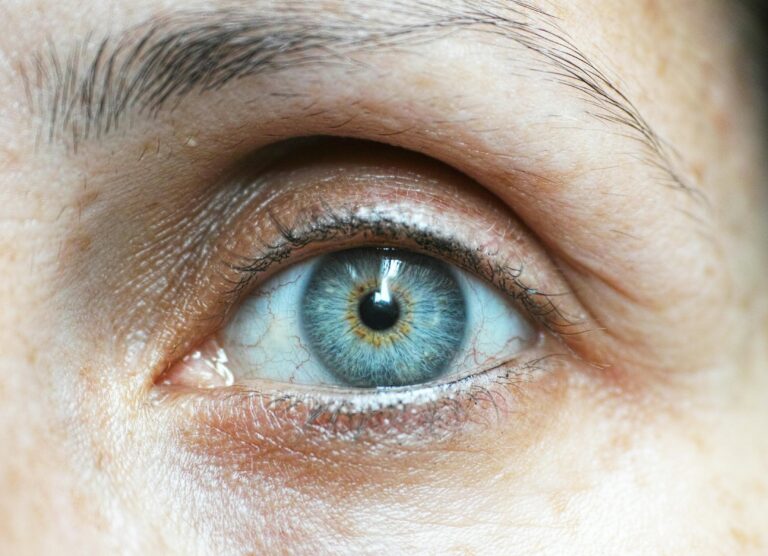
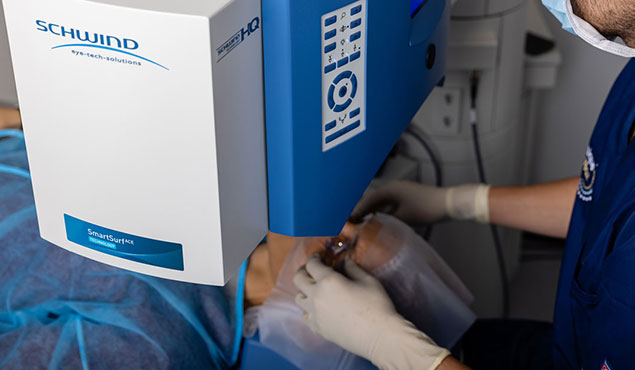
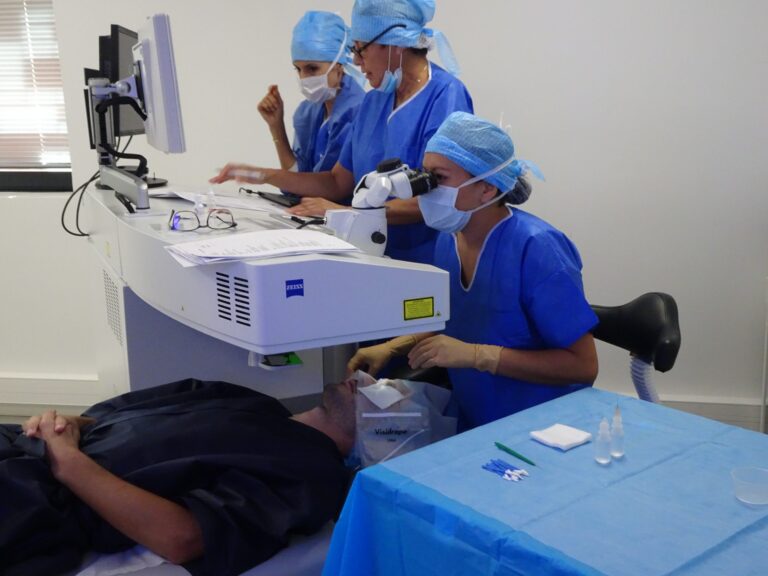
Keratopigmentation is performed by a qualified ophthalmologist in a sterile medical environment in Paris. The procedure uses the VisuMax Zeiss femtosecond laser, a cutting-edge technology that creates an intracorneal tunnel with micrometric precision. The biocompatible pigments used are CE-certified and specifically designed for ophthalmic use, ensuring optimal tissue tolerance.
Unlike iris implants or permanent colored contact lenses, keratopigmentation does not affect the internal structures of the eye. The pigment remains confined within the corneal thickness, with no contact with the crystalline lens or the anterior chamber. This approach significantly minimizes risks of intraocular inflammation, glaucoma, or cataracts. The entire procedure takes approximately 30 minutes under topical anesthesia, completely painless.
A comprehensive preoperative assessment including corneal topography, pachymetry, and fundus examination is systematically performed before any intervention. This assessment confirms patient eligibility and allows personalization of the desired eye color change through a realistic 3D simulation.
Results and post-operative care
The permanent results of keratopigmentation are visible within the first hours following the procedure. The new eye color achieved is stable, natural-looking, and lasting. Patients notice an immediate change that fully stabilizes within 2 to 4 weeks, once corneal healing is complete.
Post-operative follow-up includes consultations at D+1, D+7, D+30, and D+90. Antibiotic and anti-inflammatory eye drops are prescribed for 2 to 4 weeks. Daily activities can be resumed the next day, with simple precautions: avoid eye makeup for one week and wear sunglasses outdoors.
The before after results speak for themselves: thousands of satisfied patients worldwide have benefited from this technique. The keratopigmentation fee is 5,500 EUR for both eyes, including the preoperative assessment, the procedure, and complete follow-up care. A free consultation allows you to evaluate your eligibility and visualize the expected outcome.
Frequently asked questions about keratopigmentation
Is keratopigmentation painful? No. The procedure is performed under topical anesthesia with eye drops. Patients feel slight pressure during VisuMax Zeiss laser application but no pain. Mild discomfort may persist for a few hours after the operation.
How long do results last? Keratopigmentation delivers permanent results. The biocompatible pigments are encapsulated within the cornea and do not degrade over time. Unlike colored contact lenses, no daily maintenance is required.
Who is eligible for this procedure? Any adult with healthy eyes, after validation by the ophthalmologist during the preoperative assessment. Contact lens wearers must remove them at least 48 hours before the consultation. Patients who have undergone refractive surgery (LASIK, PRK) may be eligible after evaluation.
Why choose Paris for keratopigmentation? Paris is home to Europe’s leading keratopigmentation specialists. Our center exclusively uses the latest generation VisuMax Zeiss and certified biocompatible pigments. The all-inclusive fee is 5,500 EUR, with installment payment options available. Book a free consultation with no commitment today.
Safety and keratopigmentation protocol
Keratopigmentation is performed by a qualified ophthalmologist in a sterile medical environment in Paris. The procedure uses the VisuMax Zeiss femtosecond laser, a cutting-edge technology that creates an intracorneal tunnel with micrometric precision. The biocompatible pigments used are CE-certified and specifically designed for ophthalmic use, ensuring optimal tissue tolerance.
Unlike iris implants or permanent colored contact lenses, keratopigmentation does not affect the internal structures of the eye. The pigment remains confined within the corneal thickness, with no contact with the crystalline lens or the anterior chamber. This approach significantly minimizes risks of intraocular inflammation, glaucoma, or cataracts. The entire procedure takes approximately 30 minutes under topical anesthesia, completely painless.
A comprehensive preoperative assessment including corneal topography, pachymetry, and fundus examination is systematically performed before any intervention. This assessment confirms patient eligibility and allows personalization of the desired eye color change through a realistic 3D simulation.
Results and post-operative care
The permanent results of keratopigmentation are visible within the first hours following the procedure. The new eye color achieved is stable, natural-looking, and lasting. Patients notice an immediate change that fully stabilizes within 2 to 4 weeks, once corneal healing is complete.
Post-operative follow-up includes consultations at D+1, D+7, D+30, and D+90. Antibiotic and anti-inflammatory eye drops are prescribed for 2 to 4 weeks. Daily activities can be resumed the next day, with simple precautions: avoid eye makeup for one week and wear sunglasses outdoors.
The before after results speak for themselves: thousands of satisfied patients worldwide have benefited from this technique. The keratopigmentation fee is 5,500 EUR for both eyes, including the preoperative assessment, the procedure, and complete follow-up care. A free consultation allows you to evaluate your eligibility and visualize the expected outcome.
Frequently asked questions about keratopigmentation
Is keratopigmentation painful? No. The procedure is performed under topical anesthesia with eye drops. Patients feel slight pressure during VisuMax Zeiss laser application but no pain. Mild discomfort may persist for a few hours after the operation.
How long do results last? Keratopigmentation delivers permanent results. The biocompatible pigments are encapsulated within the cornea and do not degrade over time. Unlike colored contact lenses, no daily maintenance is required.
Who is eligible for this procedure? Any adult with healthy eyes, after validation by the ophthalmologist during the preoperative assessment. Contact lens wearers must remove them at least 48 hours before the consultation. Patients who have undergone refractive surgery (LASIK, PRK) may be eligible after evaluation.
Why choose Paris for keratopigmentation? Paris is home to Europe’s leading keratopigmentation specialists. Our center exclusively uses the latest generation VisuMax Zeiss and certified biocompatible pigments. The all-inclusive fee is 5,500 EUR, with installment payment options available. Book a free consultation with no commitment today.