The Rarest Eye Colors in the World: Complete Rankings, Science, and How to Obtain Them
Top 5 Rarest Eyes: From Mythical Violet to Bewitching Amber
The Science Behind Rare Eye Colors: Genetics and Structural Color
Eye color is determined by a complex interplay of genetics, specifically involving the OCA2 and HERC2 genes on chromosome 15. These genes control melanin production in the iris stroma, the layer responsible for absorbing and reflecting light. The amount and type of melanin, combined with a phenomenon known as Rayleigh scattering, creates the structural color we perceive when looking at someone’s eyes.
Research in ophthalmology has revealed that babies are often born with blue or gray eyes because melanin production in the iris increases with age. A newborn’s eye color may not stabilize until 6 to 12 months after birth, sometimes even later. This is why predicting a baby’s permanent eye color at birth remains unreliable.
From a scientific perspective, brown eyes contain the most melanin, making them the most common worldwide. Blue eyes result from low melanin combined with Rayleigh scattering of light through the stroma. Green and hazel eyes fall on a spectrum between these extremes, with varying degrees of melanin and lipochrome pigment creating their unique hues.
Eye Color Distribution by Ethnicity and Population
The global distribution of rare eye colors varies dramatically across ethnicities and geographic populations. Green eyes, considered one of the rarest at only 2% of the world population, are most commonly found among people of European descent, particularly in Northern and Central Europe. In contrast, amber and violet eyes are extraordinarily rare across all ethnic groups.
Among Caucasian populations, approximately 55-79% have blue or green eyes, while Asian and African populations overwhelmingly have brown eyes (over 90%). This racial and ethnic variation is directly linked to evolutionary adaptations: darker iris pigmentation in equatorial regions provided protection against UV radiation, while lighter eye colors emerged in Northern European populations with less intense sunlight.
Heterochromia, the condition of having two different colored eyes, affects less than 1% of the global population. This rare eye trait can be genetic (present from birth) or acquired through injury or disease. Famous celebrities with heterochromia include Kate Bosworth and Mila Kunis, making this unique condition increasingly celebrated as beautiful and attractive rather than unusual.
Modern Methods to Change or Obtain Rare Eye Colors
For those who dream of possessing a rare eye color they were not born with, several modern options exist, each with different levels of permanence and safety. Colored contact lenses remain the most accessible temporary solution, available in virtually every shade from natural-looking hazel to striking violet. However, colored contacts require proper fitting by an ophthalmologist and carry risks of infection if not properly maintained.
Eye surgery to permanently change iris color has evolved significantly. Keratopigmentation, the technique pioneered by FLAAK in Paris, represents the safest permanent solution available today. Unlike experimental laser procedures that destroy melanin (with unpredictable long-term effects), keratopigmentation uses biocompatible pigments applied to the corneal stroma through a precise, minimally invasive procedure.
The FLAAK approach allows patients to choose from the entire spectrum of rare eye colors, including the coveted amber, green, gray, and copper shades. Each procedure is preceded by a detailed 3D simulation so patients can visualize their transformation before committing. The results are immediate, permanent, and reversible if desired, a unique advantage in the field of aesthetic ophthalmology.
Frequently Asked Questions About Rare Eye Colors
What percentage of the population has the rarest eye colors?
Green eyes are found in approximately 2% of the global population, amber in less than 5%, gray in about 3%, and true violet or red eyes (associated with albinism) in less than 0.01%. These percentages vary significantly by geographic region and ethnicity.
Can eye color change naturally with age?
Yes. Most newborns are born with blue or gray eyes that may darken over the first year as melanin production increases. In adults, subtle changes can occur due to aging, sun exposure, or certain medical conditions. However, dramatic natural color changes in adults are extremely rare and should be evaluated by an ophthalmologist.
Is keratopigmentation safe for obtaining rare eye colors?
When performed by qualified specialists like the FLAAK team in Paris, keratopigmentation has an excellent safety profile. The procedure works on the corneal surface only, without entering the eye. Over 15 years of clinical research supports its safety, and the biocompatible pigments used have been extensively tested. FLAAK refuses approximately 1 in 4 candidates who do not meet strict eligibility criteria.
1. The Magic of Exceptional Gazes
It is often said that the eyes are the mirror of the soul, but for a tiny fraction of the world’s population, this mirror possesses a hue so unique that it instantly fascinates anyone who looks at it.
While nearly 79% of the global population has brown eyes, rarity has always attracted envy. Why are we hypnotized by an emerald green gaze, unsettled by steel-gray eyes, or fascinated by the golden glow of an amber iris? It is a complex mix of genetic lottery, optical phenomena, and statistical rarity.
Today, possessing a unique eye color has become a true asset of seduction, a marker of personality, and even an aesthetic dream. But did you know that these colors, once reserved for less than 1% of humanity by the chance of birth, are now accessible? Before discovering how modern science allows these shades to be recreated safely, let’s dive into the fascinating ranking of the rarest eye colors on the planet.
2. Ranking of the Rarest Eye Colors in the World
This ranking is established based on global demographic statistics and genetic peculiarities. Prepare to discover nuances you may have never encountered on the street.
2.1 Violet / Purple (Myth turned reality? – < 0.01%)
This is the “Holy Grail” of eye colors. Often associated with the legendary actress Elizabeth Taylor, whose gaze appeared violet on screen, this color is technically the rarest.
- The scientific explanation: There is no violet pigment in the human eye. This shade is an extremely rare optical illusion. It generally occurs in people with a very mild form of albinism. The lack of pigment in the iris allows the red blood vessels of the retina to show through. When this red mixes with the little blue present in the iris (caused by light scattering), the eye appears violet or purple.
- The anecdote: Many people confuse a very deep blue ringed with red (tired or irritated eyes) with violet, but the true “amethyst” hue remains a sublime and almost non-existent biological anomaly.
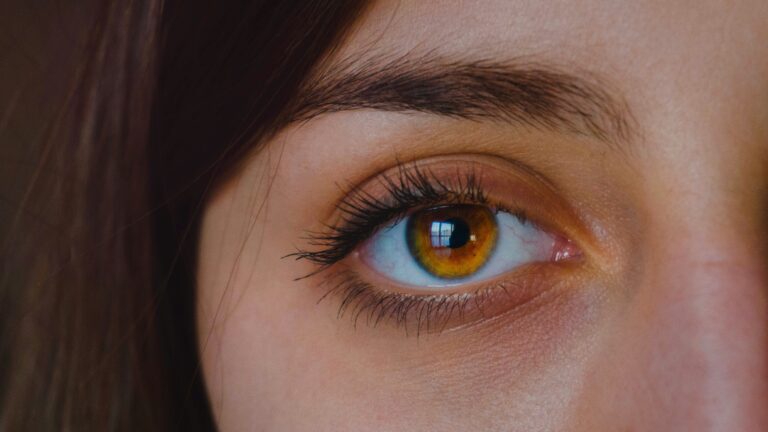
2.2 Amber / Golden (The Wolf Eye – approx. 0.05%)
Do not confuse amber with “hazel”. Hazel eyes change color (a mix of green and brown), while amber eyes are a solid, uniform, golden color.
- Characteristics: This yellow-coppery hue is due to the presence of lipofuscin (a yellow pigment) coupled with a small amount of brown melanin. It is a color very present in the animal kingdom (wolves, felines, birds of prey) but extremely rare in humans.
- Where are they found? This fascinating shade, which seems to “glow” like gold in the sun, is sometimes observed in certain populations of Eastern Europe, Central Asia, or South America. It is a color that evokes a wild and magnetic beauty.
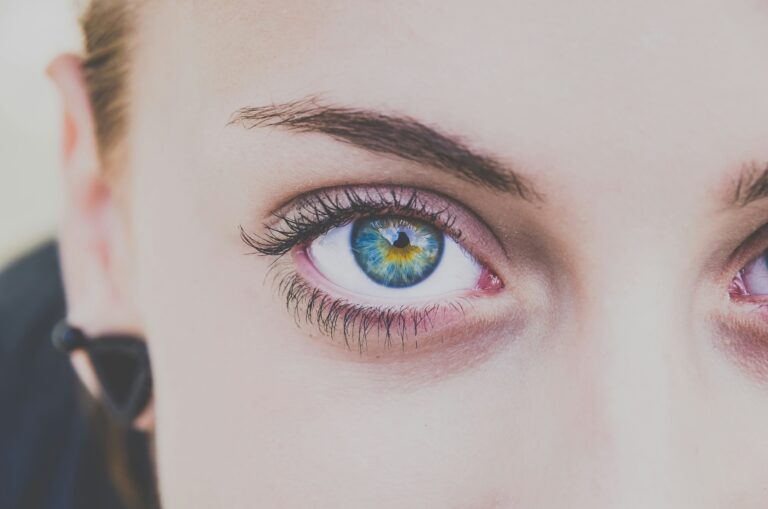
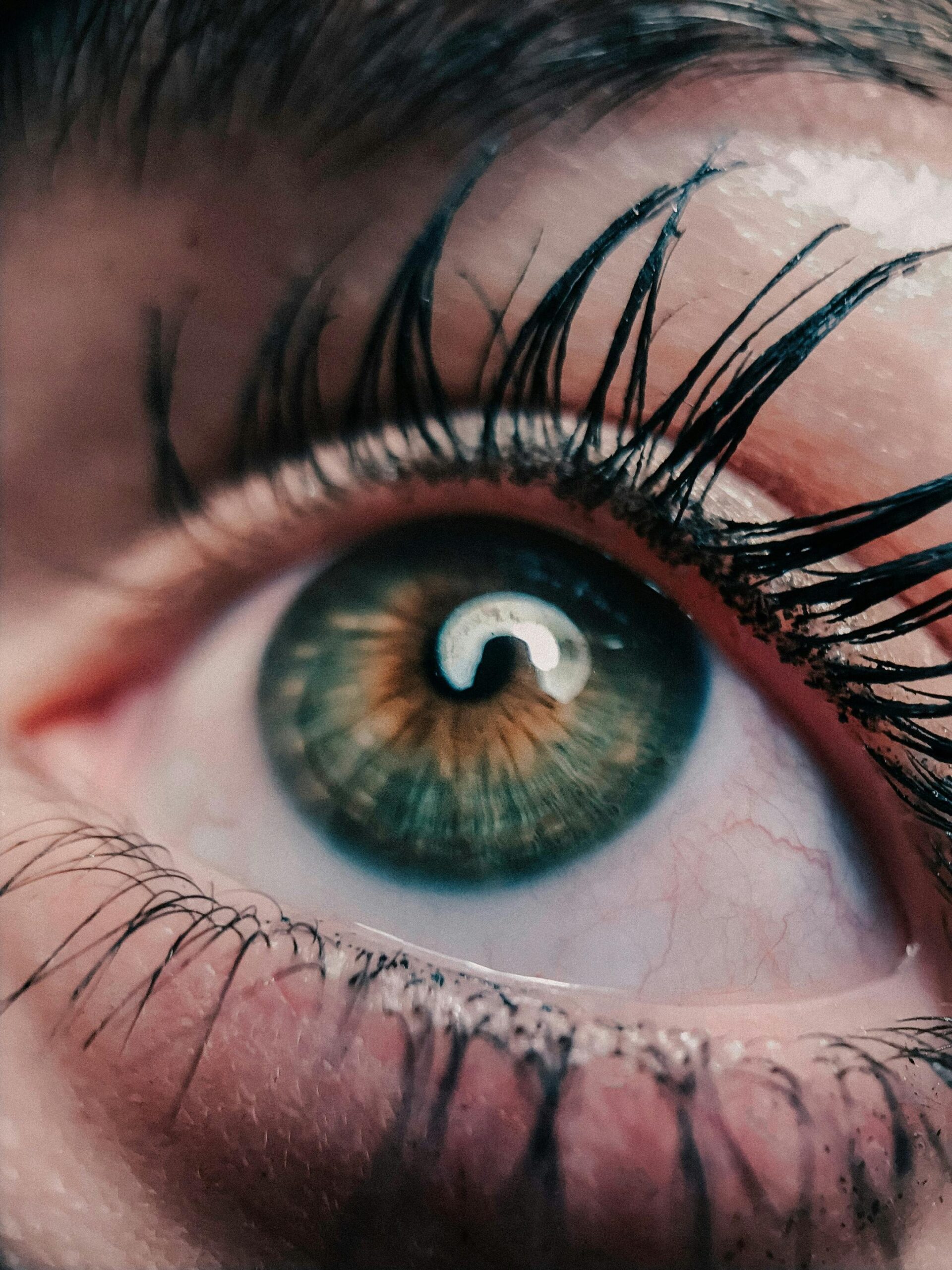
2.3 Pure Green (The coveted Emerald – 2% max)
Contrary to popular belief, green is extremely rare on a global scale. While you often encounter them in Europe, know that they are almost absent in Asia, Africa, or South America.
- The secret of green: Green eyes contain… no green pigment! It is a trick of physical magic. The iris contains very little melanin (like blue eyes) but also a small amount of lipofuscin (yellow). Blue (created by light scattering) mixed with the yellow filter visually results in green.
- Variants: From pine green to sea green, this color is often considered the most seductive in Western psychological studies.
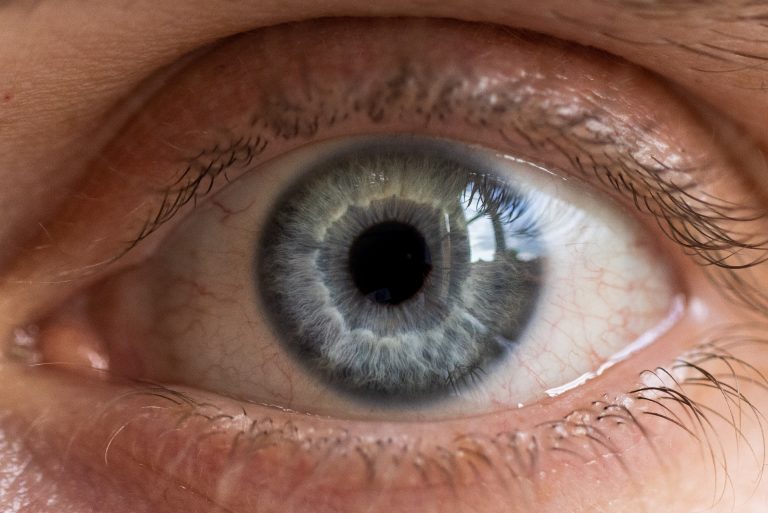
2.4 Light Gray / Silver (Cold Steel – 1 to 3%)
Often confused with blue, gray eyes are nonetheless biologically different.
- Unique structure: While blue eyes scatter light, gray eyes possess a denser collagen structure in the stroma (the fibrous part of the iris). This density interferes differently with light, reflecting it in a more “metallic” way, like a cloudy sky or a silver plate.
- Geography: They are found mainly around the Baltic Sea and in Northern Europe. They have the distinction of being “chameleon” eyes, appearing to change shade depending on the color of clothes worn or the intensity of the lighting.
2.5 Heterochromia (The “Odd Eye” look – 0.6%)
More than a color, this is a spectacular genetic peculiarity: having two eyes of different colors (complete heterochromia) or two colors in the same eye (sectoral).
- The origin: It can be congenital (present from birth, linked to genetic mosaicism) or acquired following trauma.
- The Star Effect: Celebrities like Kate Bosworth or Mila Kunis have popularized this singularity. It is the height of exclusivity: an asymmetrical gaze that leaves no one indifferent.
3. Why Are These Colors So Rare?
Rarity is not a coincidence. Our eye color is governed by complex genetics (and not just a single gene as is sometimes taught in school).
- The Melanin Factor: Everything depends on the quantity and type of pigment. Eumelanin (brown/black) is genetically dominant to protect the eye from the sun. This is why brown eyes are the biological norm for the human species.
- The Genetic Lottery: Genes like OCA2 and HERC2 control melanin production. To get blue, green, or gray, a “mutation” (in the noble sense) is needed that reduces this production. To have amber or violet, it requires an even more improbable alignment of genetic factors.
- Cultural Myths: This biological rarity has fueled legends. In the Middle Ages, green or gray eyes were sometimes associated with witchcraft. Today, they are associated with charisma and uniqueness.
4. How to Obtain These Rare Colors Today?
If nature has not endowed you with these genetic jewels, aesthetic medicine and modern optics offer solutions. But beware, not all are equal in terms of safety.
4.1 Contact Lenses: The Temporary Illusion
This is the best-known solution.
- The Pros: Reversible, fun, allows testing violet or amber for an evening.
- The Cons: The result often lacks depth (“flat” or “cartoonish” effect). Above all, daily wear of colored lenses carries risks of infection, corneal hypoxia (the eye breathes poorly), and severe dryness. It is not a viable lifelong solution for those who want to adopt a new identity.
4.2 Keratopigmentation: The Safe Revolution
This is the method that has revolutionized eye aesthetics in recent years. Unlike iris implants (dangerous and to be avoided), keratopigmentation (or corneal tattooing) is a surface technique.
- The Principle: Using a high-precision laser, a micro-tunnel is created in the cornea to insert a biocompatible pigment. The iris is not touched, and the inside of the eye is not entered.
- Why does it change everything? This technique allows the rarest colors (pearl gray, emerald green, golden honey) to be recreated with a natural and definitive result, without the blindness risks linked to implants.
5. Our FLAAK Expertise: Recreating the Exceptional Safely
At FLAAK, we don’t just change eye color. We work like artists to reproduce the subtleties of nature’s rarest shades.
Thanks to our strict medical protocol and the use of certified pigments in France, we can satisfy the most demanding requests:
- Dreaming of that feline Amber? Our “Honey” pigments capture the light.
- Aiming for intense Green? Our “Emerald” or “Lagoon” shades recreate the depth of the Celtic gaze.
- Fascinated by Nordic Gray? Our “Riviera” shade offers that sophisticated metallic sheen.
Comparison: Natural Rarity vs. FLAAK Keratopigmentation
| Rare Color | % Population | Obtainable by Keratopigmentation? | FLAAK Result |
| Violet | < 0.01% | ✅ Yes (On specific request) | A deep, mysterious, and sophisticated gaze. |
| Amber / Gold | 0.05% | ✅ Yes | An intense, warm, and luminous golden hue. |
| Pure Green | 2% | ✅ Yes | A radiant, natural green that illuminates the face. |
| Silver Gray | 1-3% | ✅ Yes | An elegant, modern, and magnetic steel gray. |
| Heterochromia | 0.6% | ✅ Yes | Possibility to treat only one eye to create a unique asymmetry. |
And the price?
The exceptional is more accessible than you think. Our all-inclusive package (Assessment + Laser Surgery + 12-month Follow-up) is between €5,500 and €7,000.
This is significantly cheaper than the rates charged in the USA (often $12,000 to $15,000) for French-level medical quality and safety (CE standards).
6. Testimonials: From Rare Dream to Reality
Our patients are our best proof. They went from dreaming to reality.
Clara, 32 years old – New shade: Opal Green
“I always had very dark brown eyes that hardened my features. I dreamed of those rare green eyes my grandmother had. With keratopigmentation, I don’t feel like I have lenses, I feel like it’s ME. It’s natural, luminous. I finally feel aligned with my personality.”
Julien, 28 years old – New shade: Riviera Gray
“I wanted something unique, not a classic blue. The gray the FLAAK team proposed is incredible. Depending on the light, it leans towards silver or ice blue. People often stop me to ask if they are my real eyes. It’s stunning.”
7. Conclusion: Your Rare Color Awaits You
Nature distributes eye colors randomly, and shades like violet, amber, or pure green remain fascinating statistical exceptions.
But today, you are no longer forced to settle for genetic chance. Keratopigmentation offers a historic opportunity: the chance to choose your singularity.
No more uncomfortable lenses, no more unnecessary low-cost risks. Opt for a safe metamorphosis, supervised by French experts.
Don’t just dream your gaze, live it.
Discover which rare color is made for you during a free assessment. Contact FLAAK today.
Can You Actually Obtain a Rare Eye Color? The Role of Keratopigmentation
Reading about the rarest eye colors in the world naturally raises a question: is it possible to actually obtain one of these colors — or at least to move your natural eye color toward a rarer, more striking shade? The answer, in 2025, is yes — through keratopigmentation, the only surgical technique that permanently deposits color within the corneal stroma.
At FLAAK in Paris, our ophthalmologist uses the VisuMax femtosecond laser to create a precise intrastromal pocket in the cornea, into which biocompatible pigments are carefully introduced. The result is a permanent change to the apparent color of the iris — one that is integrated into the structure of the eye itself rather than sitting on its surface like a contact lens.
Which Rare Eye Colors Can Be Achieved Through Keratopigmentation?
Keratopigmentation is most effective at moving eye color toward darker and more saturated tones. Here is what is currently achievable at FLAAK:
- Amber: One of the rarest natural eye colors, amber is achievable through keratopigmentation using golden-brown biocompatible pigments. Patients with light eyes can obtain a warm amber tone that is genuinely rare in the global population.
- Dark grey: A deep grey tone — often described as steel or slate — can be created through careful pigment selection, producing an eye color that reads as distinctive and uncommon.
- Very dark brown / black: While not the rarest, jet-black appearing eyes are striking and distinctive. Keratopigmentation can produce this effect even in blue or green-eyed patients.
- Intensified limbal ring (annular technique): For patients who want to enhance the striking quality of their existing color, the annular approach deepens the limbal contrast — creating a vivid definition associated with the most striking natural eyes in the world.
It is important to note that keratopigmentation cannot currently produce blue, green, or violet eyes from a darker base. The technique adds pigment rather than removing it — moving eye color from lighter to darker, not the reverse. For those seeking lighter colors, laser iris depigmentation exists but carries a different risk profile.
The Permanence Factor: Why It Matters for Rare Colors
Colored contact lenses can simulate nearly any eye color — including violet, red, and pink. But they are not permanent, require daily maintenance, and carry documented infection risks with long-term wear. They also do not replicate the optical depth and translucency of a real iris.
Keratopigmentation produces a result that is permanent — the biocompatible pigments are housed within the corneal stroma where they are protected from the external environment and from cellular clearance. Published studies show stable color at 5+ year follow-up. For patients who want a rare eye color not as a costume but as part of their identity, this permanence is the defining advantage.
The Consultation Process at FLAAK
Every keratopigmentation journey at FLAAK begins with a free preliminary consultation — available via WhatsApp for patients based outside Paris. The in-person pre-operative examination then assesses corneal anatomy, health markers, and the specific color outcome the patient is seeking. A digital color simulation is performed so the patient can preview the expected result before committing to the procedure.
The procedure is performed by a board-certified ophthalmologist under sterile surgical conditions, using the VisuMax femtosecond laser. Price for keratopigmentation at FLAAK starts at €5,500 for both eyes.
The Science of Eye Color: Genetics, Melanin, and Rarity
Eye color is determined primarily by the concentration and distribution of melanin in the iris’s anterior stromal layer. High melanin concentration produces brown and black eyes — the most common globally. Low concentration produces blue eyes, where the color is largely a structural phenomenon (Tyndall scattering through a depigmented stroma). Intermediate concentrations and distributions produce the full spectrum between these extremes: hazel, green, grey, amber.
Genetic studies have identified multiple loci contributing to eye color — most notably OCA2, HERC2, and SLC24A4. The interactions between these genes produce the continuous spectrum of eye color variation we observe across human populations. Truly rare colors — violet, red-appearing, heterochromia — typically result from unusual mutations, structural anomalies, or medical conditions rather than normal variation within the OCA2/HERC2 system.
This genetic complexity means that selective breeding for rare eye colors is not a meaningful strategy — the relevant alleles are recessive and rare, making their simultaneous expression statistically exceptional. The only reliable way to obtain a rare eye color in adulthood is through a permanent surgical intervention like keratopigmentation at FLAAK.
Deep Dive: The Genetics of Eye Color — How Melanin Creates Every Shade
Understanding why certain eye color combinations are rare requires looking at how melanin works at the cellular level. The human iris contains two types of melanin: eumelanin (brown-black) and pheomelanin (red-yellow). The relative concentration, distribution, and layering of these two melanin types in the iris stroma creates virtually every eye color variation observed in people.
Brown eyes contain the highest concentration of eumelanin in the anterior iris stroma — a genetic trait that is dominant across virtually all human populations. When people have brown eyes, their iris literally contains more melanin than any other eye color group. This is not an accident of evolution; high melanin density in the iris provides ultraviolet protection and is genetically advantageous in equatorial environments where people experience intense solar radiation. Brown eyes in this sense represent the biological default — the eye color that melanin produces when genetic signals for pigment reduction are absent.
Blue eyes represent the opposite extreme of the melanin spectrum. Blue eyes contain minimal melanin in the anterior stroma — the color people perceive as blue is actually a structural phenomenon called Tyndall scattering. When light enters a low-melanin iris stroma, shorter blue wavelengths scatter back to the observer, while longer wavelengths are absorbed. This is why blue eyes appear blue without containing any blue pigment at all. Blue eyes are concentrated in Northern European populations — particularly Scandinavia, the Baltic states, and the British Isles — where reduced UV radiation made high protective melanin density less advantageous for people.
Green eyes are produced by an intermediate melanin configuration: low-to-moderate eumelanin combined with a small presence of pheomelanin (yellowish pigment). The Tyndall scattering of green eyes works similarly to blue eyes, but the yellow-tinted pheomelanin shifts the scattered light from blue toward green. Pure green eyes are among the rarest eye color variations globally — found in approximately 2% of people, predominantly in Northern and Central Europe. Green eyes are particularly uncommon in Asia and Africa, where high eumelanin concentration in people suppresses the structural color phenomenon entirely.
Hazel eyes represent a uniquely complex melanin distribution. Unlike green eyes (where the eye color is uniformly distributed) or blue eyes (where melanin is uniformly absent), hazel eyes contain variable melanin concentrations across different iris zones. The result is an eye color that shifts between gold, brown, and green depending on lighting — making hazel eyes one of the most dynamically expressive eye color categories. Hazel eyes affect approximately 5% of people worldwide and are particularly prevalent among people of Middle Eastern, Brazilian, and Southern European descent.
Gray eyes are structurally distinct from blue eyes despite their visual similarity. Gray eyes contain a higher density of collagen fibers in the iris stroma, which scatters light differently from the low-collagen stroma of blue eyes. This denser collagen creates the metallic or steel appearance characteristic of gray eyes. True gray eyes — rather than gray-blue — are found in approximately 1–3% of people, predominantly among populations bordering the Baltic Sea and in parts of the Caucasus region. The structural melanin differences between gray eyes and blue eyes are subtle but visible to careful observers — gray eyes tend to reflect more light and appear more opaque than the translucent quality of true blue eyes.
Population Statistics: Where Each Rare Eye Color Appears Among People
The global distribution of eye color is anything but uniform. Different eye color frequencies appear in strikingly different concentrations by region, ethnicity, and geographic ancestry. Understanding these patterns reveals why certain eye color combinations fascinate people across cultures.
| Eye Color | Global Prevalence | Highest Concentration |
|---|---|---|
| Brown eyes | ~79% of people | Universal — dominant in Asia, Africa, South America |
| Blue eyes | ~8–10% of people | Northern Europe (up to 89% in Estonia and Finland) |
| Hazel eyes | ~5% of people | Middle East, Brazil, Southern Europe |
| Amber eyes | ~5% of people | Eastern Europe, Central Asia, South America |
| Gray eyes | ~1–3% of people | Baltic states, Caucasus region, parts of Russia |
| Green eyes | ~2% of people | Northern/Central Europe — highest in Ireland, Scotland |
| Heterochromia | ~0.6% of people | Not region-specific — genetic or acquired |
| Violet/red eyes | <0.01% of people | Associated with albinism — worldwide distribution |
Among people of European descent, blue eyes remain the single most common light eye color — but green eyes are dramatically rarer than blue eyes even within the same population. In Ireland, which has the world’s highest concentration of green eyes, roughly 20–30% of people have green eyes — still making green eyes a statistical minority even in the greenest-eyed nation. The rarity of green eyes globally relative to blue eyes reflects the additional genetic complexity required to produce the specific melanin and pheomelanin combination that creates green eyes.
Hazel eyes present a classification challenge that affects published statistics: different researchers categorize hazel eyes differently from study to study. Some count hazel eyes as a subset of brown, others as a distinct eye color category. When hazel eyes are counted separately, their prevalence is approximately 5% globally — making hazel eyes rarer than blue eyes but more common than green eyes. The shifting nature of hazel eyes — appearing different eye color values under different light — makes them among the most visually distinctive eye color categories and among the most searched by people curious about rare eyes.
Gray eyes are similarly misclassified in many population studies, often grouped with blue eyes in surveys that don’t distinguish structural subtleties. True gray eyes — with their characteristic collagen-dense stroma and distinct melanin profile — are rarer than the combined blue/gray category suggests. Population geneticists estimate true gray eyes affect approximately 1% of people globally — making gray eyes comparable in rarity to green eyes when accurately classified.
Heterochromia: The Ultimate Rare Eye Color Variation Among People
Heterochromia — the condition of having two different eye color values, either between the two eyes or within a single eye — is one of the most striking genetic variations in human appearance. Unlike most eye color variations, which result from melanin concentration gradients, heterochromia typically results from localized differences in melanin distribution during embryonic iris development.
Three types of heterochromia exist among people:
- Complete heterochromia: Each eye has a distinctly different eye color — one blue eye, one brown eye, for example. This is the form of heterochromia most visible to others and most associated with the condition’s cultural mystique. Complete heterochromia reflects a fundamental asymmetry in melanin production between the two irises during fetal development.
- Sectoral heterochromia: A portion of one iris has a different melanin concentration than the surrounding iris tissue, creating a “pie slice” of different eye color within a single eye. Some people with sectoral heterochromia are unaware of it until a friend or photographer draws attention to it — particularly when the eye color contrast is subtle.
- Central heterochromia: The center of the iris (around the pupil) has a different eye color than the peripheral iris. Many people with central heterochromia describe their eyes as hazel eyes when in fact the inner ring and outer ring are distinctly different eye color zones — creating the starburst effect visible in some very striking eyes with high melanin contrast.
Heterochromia can be congenital (present from birth) or acquired through injury, inflammation, or certain medications. Celebrities known for their heterochromia include Kate Bosworth (one blue eye, one partially brown eye) and Mila Kunis (one blue eye, one brown eye). The cultural mystique of heterochromia has made it one of the most searched eye color topics globally — people are fascinated by the possibility of having two visibly different eyes.
For people who desire a form of heterochromia — whether to enhance a natural asymmetry or to create a new one — keratopigmentation offers a unique possibility. The annular or full technique can be applied to only one eye, creating a deliberate difference in eye color between the two eyes. This is one of the more unusual applications of keratopigmentation, but it is achievable for appropriate candidates who want this specific eye color transformation.
The Melanin Science Behind Green Eyes: Why People With Green Eyes Are So Rare
Of all the non-brown eye color categories, green eyes are the most genetically unusual. This is because producing green eyes requires a precise combination of factors: low-to-intermediate eumelanin, a specific presence of pheomelanin, and Tyndall scattering through a stroma with the right optical properties. All three conditions must be met simultaneously — which is why green eyes occur in only about 2% of people despite being genetically possible across many populations worldwide.
The genetics of green eyes involve multiple loci — primarily OCA2, HERC2, and SLC24A4 — but also modifier genes that influence pheomelanin expression and the precise balance of melanin types. Two parents with green eyes can produce children with blue eyes, hazel eyes, or even light brown eyes — because the allele combinations that produce green eyes are not always inherited together. This genetic complexity makes green eyes one of the hardest eye color outcomes to predict from parental genetics alone, even for people with generations of light-eyed ancestry.
For people who have always wanted green eyes but were not born with them, keratopigmentation offers a partial pathway: the technique cannot create green eyes from a dark base (adding melanin-containing pigments will not produce green, as green eyes result from low melanin with Tyndall scattering), but it can create dark amber, warm grey, and deep brown that are themselves genuinely rare eye color outcomes globally. For people with very light eyes (pale blue eyes or very light gray eyes) who want a warmer, rarer eye color, amber keratopigmentation delivers one of the world’s rarest natural eye color equivalents — eyes that fall below 1% prevalence in global populations.
Eye Color and Perception: Why Rare Eyes Captivate People
Beyond genetics, there is a psychological dimension to why rare eye color variations captivate people. Research in evolutionary psychology and visual perception consistently shows that eyes with high limbal ring contrast, vivid color saturation, and pupil clarity are associated with health, youth, and attractiveness across cultures. People make rapid, automatic judgments about others based on eye color and iris clarity — often before conscious awareness engages.
Green eyes are rated as particularly attractive in Western psychological studies — perhaps because their rarity creates novelty value, or perhaps because the structural melanin configuration that produces green eyes also creates an unusually vivid, light-reflective iris. Hazel eyes are often described as changing or alive by people who find them compelling — the variable melanin distribution that makes hazel eyes shift eye color creates a dynamic quality that static eye color categories don’t capture.
Gray eyes are frequently associated with intelligence and depth in cultural mythology — from Greek and Norse mythological figures to modern literature. The collagen-heavy iris structure of true gray eyes creates a distinctive metallic quality that photographs unlike any other eye color — which may explain why gray eyes appear disproportionately in fashion and editorial imagery relative to their population frequency among people.
Blue eyes remain culturally prominent despite being relatively more common than green eyes — because blue eyes cover such a wide spectrum, from pale ice-blue to deep cerulean, that no two blue eyes look quite the same. The absence of melanin that creates blue eyes also creates their characteristic translucency — the sense that you are looking into depth rather than at a surface, which people find compelling even when blue eyes are common in their environment. This translucent quality distinguishes blue eyes from gray eyes despite their superficial similarity.
For people who are drawn to the rarest eye color categories — amber, deep grey, intensified dark — keratopigmentation at FLAAK offers the opportunity to achieve an eye color that places them in the global rarity brackets that genetics alone distributes to fewer than 5% of people. The color you choose becomes permanently yours — as integrated and authentic as any natural eye color that people are born with.
Rare Eyes Around the World: Cultural and Aesthetic Significance of Eye Color
Across cultures and throughout history, certain eye color variations have carried cultural weight far beyond their statistical frequency. Eyes with unusual eye color appear in mythology, art, and literature as markers of the extraordinary — and this cultural significance reinforces the fascination with rare eyes that continues today.
In ancient Greece, grey-eye color was associated with wisdom — the goddess Athena was consistently described as having grey eyes, distinguishing her eyes from the ordinary mortal gaze. In Celtic mythology, green-eye color was associated with otherworldly powers — eyes with that particular green eye color were considered a mark of fae ancestry or magical sight. These cultural associations did not arise arbitrarily: rare eye color categories stood out visually against the brown-eye color majority, and rarity itself was interpreted as significance.
In contemporary culture, the celebrity with unusual eyes — heterochromic eyes, amber eyes, green eyes — receives disproportionate attention in media and social commentary. These eyes are photographed and discussed specifically because the eye color is unusual. Algorithms that drive social media engagement consistently show that content featuring unusual eye color — particularly striking eyes — outperforms equivalent content featuring ordinary eye color categories.
The psychology of rare eye color fascination is not superficial — it reflects deep biological programming. Human eyes are uniquely expressive compared to other primates, and eye color is one of the first features humans assess in interpersonal interaction. Eyes with unusual eye color hold attention longer, are remembered more accurately, and are rated as more attractive across cultures where eye color variation exists. This is the visual reality that makes rare eyes genuinely valuable as an aesthetic asset — and why patients seek out eye color change that delivers genuine rarity rather than superficial imitation.
At FLAAK, we understand that patients who seek a new eye color are not just seeking a different eye color — they are seeking eyes that represent them more accurately, that command the attention rare eyes naturally attract, and that carry the depth and permanence of a genuine biological eye color rather than a temporary cosmetic overlay. The rare eye color categories we achieve through keratopigmentation — amber, dark grey, deep warm brown with enhanced limbal rings — are genuinely rare eye color outcomes globally. Patients who undergo our eye color change procedure emerge with eyes in eye color categories that place them in the rarest percentiles of human eye color distribution.
Appreciating Rare Eyes: A Global Aesthetic Perspective
The fascination with rare eyes transcends geography and culture. In virtually every human society, eyes that deviate from the local norm command attention. In East Asia, where nearly all eyes are dark brown, light-colored eyes are considered exotic and striking. In Northern Europe, where light eyes predominate, deeply dark eyes are viewed with the same fascination. The eyes that stand out are always the rare eyes — whatever that means locally.
This cross-cultural appreciation for rare eyes reflects something fundamental about human visual attention. Our eyes are drawn to novelty, and in the domain of human eyes, novelty means rarity. The rare eyes in any population become the focal point of attention, the subject of compliments, the element remembered most clearly after an encounter. People who have rare eyes — whether green eyes, amber eyes, gray eyes, or eyes with heterochromia — report that their eyes are the feature most frequently noticed and commented upon by others.
For those who were not born with rare eyes but who have always been drawn to the aesthetic of striking eyes, keratopigmentation at FLAAK offers a permanent pathway to rare eyes. The amber eyes, dark gray eyes, and deeply defined eyes we achieve are genuinely rare globally — not a simulation of rare eyes, but actual membership in the rare eyes percentiles of the human population. When patients leave FLAAK with their new eyes, their eyes are among the rarest eyes on the planet for their combination of color and clarity. The response from the world is exactly what rare eyes have always received throughout human history: fascination, attention, and the quiet power that exceptional eyes carry in every interaction.